


If you had LASIK years ago and are now developing cataracts, you’re likely wondering whether surgery is still an option. The short answer is yes, cataract after LASIK eye surgery is both common and treatable. Cataracts are a natural part of ageing that affect most people eventually, regardless of whether they’ve had laser vision correction.
That said, your previous LASIK procedure does influence how cataract surgery is planned. The corneal reshaping from LASIK affects lens power calculations, requiring your surgeon to use specialised measurement techniques and formulas to select the right intraocular lens for your eye.
At Bright Sight Eye Specialists in Randwick, Dr. Rahul Dubey and Dr. Capucine Odouard have extensive experience performing cataract surgery on patients with prior refractive procedures. This article covers whether LASIK causes cataracts, how previous laser correction affects your surgery, and what to expect from the process.
What it means to get cataracts after LASIK
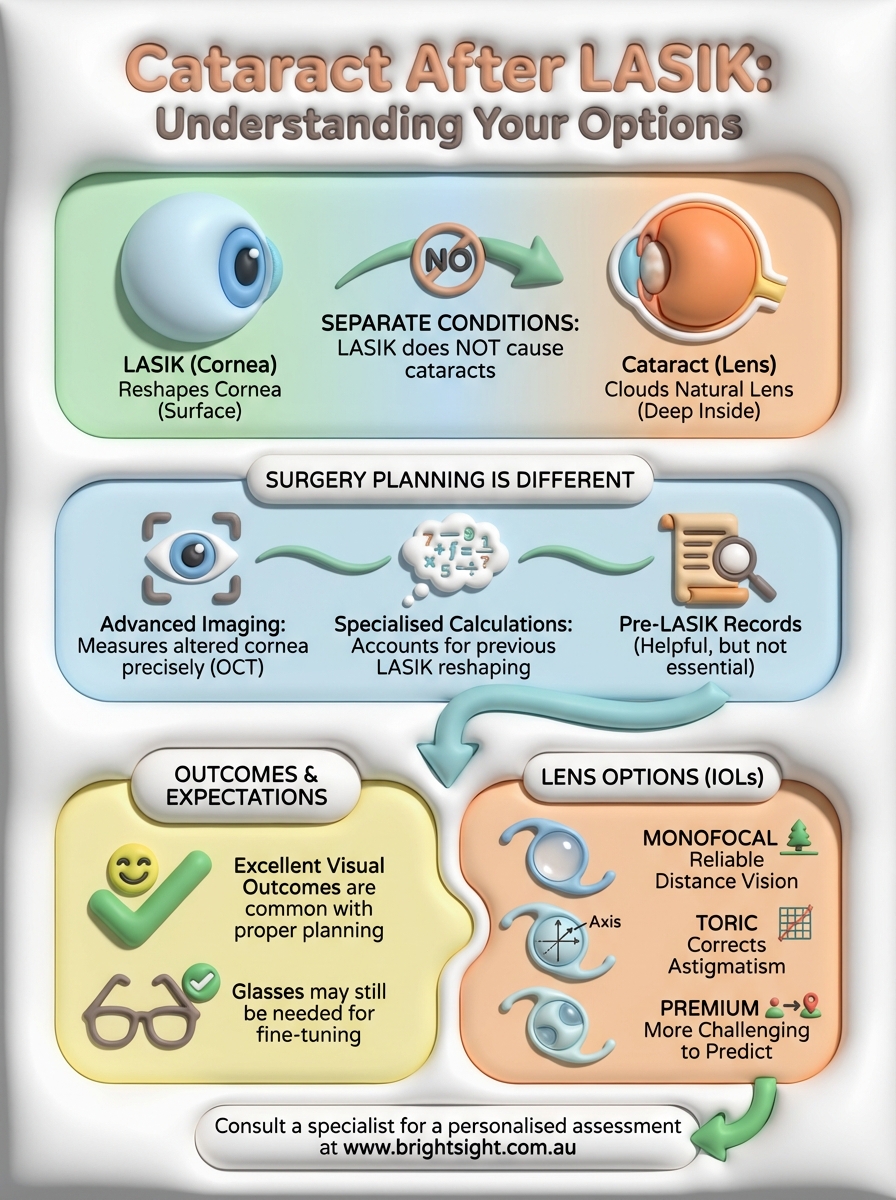
Getting cataract after LASIK eye surgery simply means you’ve developed the natural clouding of your eye’s lens after having had laser vision correction in the past. These are two completely separate conditions that affect different parts of your eye. LASIK reshapes your cornea (the clear front surface), whilst cataracts cloud your natural lens (located behind your iris and pupil).
Your LASIK procedure gave you clear vision by permanently changing your cornea’s curvature. However, that correction doesn’t protect you from cataracts, which form gradually as proteins in your lens break down over time. Most people who had LASIK in their 20s, 30s, or 40s will eventually face cataracts decades later as a normal part of ageing.
Why the two conditions are separate
LASIK and cataracts affect different structures within your eye, which means having one doesn’t increase your risk of the other. Your cornea sits at the front of your eye and acts as the primary focusing surface. The natural lens sits deeper inside, behind the coloured iris, and fine-tunes your focus.
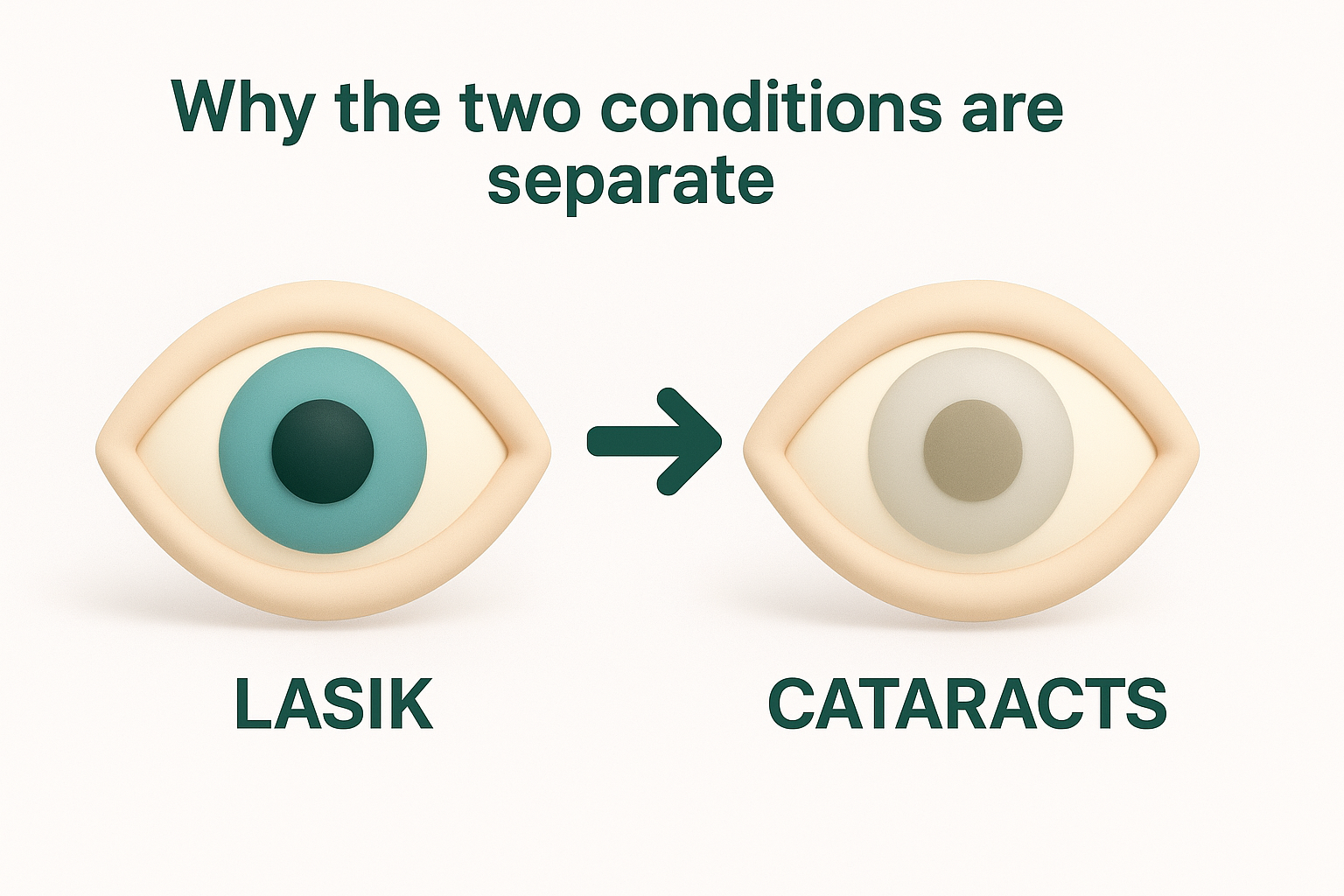
When you develop cataracts years after LASIK, your cornea still maintains its reshaped form from the original laser treatment. The cloudiness forms in an entirely different location. This separation is important because it means your previous refractive surgery doesn’t contribute to cataract formation, though it does influence how surgeons plan your cataract removal.
Having LASIK doesn’t make cataracts more likely, but it does require surgeons to use specialised measurements when planning your lens replacement.
How your cornea differs after LASIK
Your post-LASIK cornea has a flatter central curve than it did before surgery, particularly if you were treated for myopia (short-sightedness). This altered shape affects how light enters your eye and changes the refractive power readings that surgeons rely on for calculating intraocular lens strength.
Standard measurement devices often overestimate or underestimate your corneal power after LASIK because they’re calibrated for eyes with natural corneal curvatures. Your surgeon needs your pre-LASIK measurements (if available), specialised formulas, or advanced imaging technology to determine the correct lens power. Without accounting for your previous laser correction, you could end up with unexpected refractive errors after cataract surgery, requiring glasses when you’d hoped to remain spectacle-free.
Does LASIK cause cataracts?
LASIK does not cause cataracts. The laser vision correction procedure affects only your cornea, whilst cataracts form in your natural lens deep inside your eye. These are completely separate structures, which means reshaping your cornea has no impact on whether proteins in your lens will eventually cloud over.
What research shows
Studies tracking LASIK patients for decades have found no increased risk of cataract development compared to people who never had the procedure. Your likelihood of developing cataracts depends on factors like age, genetics, UV exposure, and certain medical conditions such as diabetes. The femtosecond laser used in LASIK targets only the corneal tissue and doesn’t penetrate deep enough to affect your lens.
Research published in major ophthalmology journals confirms that LASIK and cataracts are unrelated. The confusion often arises because many people who had LASIK in their younger years naturally reach the age where cataracts develop 20 to 30 years later. Your cornea maintains its reshaped form from LASIK whilst your lens ages independently.
LASIK reshapes your cornea on the front of your eye, whilst cataracts form in the lens behind your iris, making it impossible for one to cause the other.
Why the misconception exists
The timing creates a false connection in people’s minds. If you had LASIK at age 35, you might develop cataracts around age 60 or 65. That’s perfectly normal ageing, but it’s easy to wonder whether your earlier surgery played a role. The reality is that getting cataract after LASIK eye surgery happens because you’ve aged, not because of the procedure itself. Both conditions simply appear in the same person at different life stages.
Can you have cataract surgery after LASIK?
You can absolutely have cataract surgery after LASIK. This procedure is performed routinely on thousands of patients each year who had laser vision correction decades earlier. Your previous LASIK doesn’t prevent you from having your cloudy lens removed and replaced with a clear artificial lens, though your surgeon will need additional measurements and calculations to ensure accurate results.
What success rates show
Cataract surgery after previous LASIK achieves excellent visual outcomes when surgeons use appropriate measurement techniques and specialised formulas. Studies show that patients with prior refractive surgery reach similar satisfaction levels to those who never had LASIK, with most achieving clear distance vision and significantly improved quality of life.
The key difference is precision in planning. Your surgeon accounts for your altered corneal shape to select the correct intraocular lens power. When measured accurately, you can expect the same safety profile and success rate as standard cataract surgery, with most people noticing immediate improvement in clarity and colour perception within days of the procedure.
Modern measurement technology and specialised calculation methods have made cataract surgery after LASIK both predictable and safe.
Why the procedure is safe
Cataract removal works on your natural lens behind the iris, which sits several millimetres away from your cornea where LASIK was performed. Your surgeon makes a tiny incision to access and remove the clouded lens, leaving your LASIK-reshaped cornea completely untouched. The procedure carries the same low risk profile whether you’ve had previous laser correction or not.
Surgeons at Bright Sight Eye Specialists have extensive experience managing cataract after LASIK eye surgery, using advanced imaging and multiple calculation methods to verify lens power. This additional planning step ensures your results match your visual expectations.
How surgeons plan cataract surgery after LASIK
Planning cataract after LASIK eye surgery requires additional measurements and calculations compared to standard procedures. Your surgeon needs to account for the corneal reshaping from your previous laser treatment, which affects the accuracy of traditional lens power formulas. This extra step ensures you receive the correct intraocular lens strength for your visual goals.
Gathering your pre-LASIK measurements
Your surgeon will first request records from your original LASIK procedure, ideally including your corneal measurements before laser correction. These historical values help calculate your lens power more accurately by showing your eye’s natural curvature before reshaping. If you don’t have these records, your surgeon can still proceed using alternative measurement methods.
Many patients can’t locate records from procedures performed 20 or 30 years ago. Modern imaging technology compensates for this gap by using multiple measurement techniques to cross-verify lens calculations.
Using advanced imaging technology
Surgeons rely on specialised devices that measure your cornea differently from standard equipment. Optical coherence tomography (OCT) maps your corneal thickness and contour in precise detail, accounting for the flattened central zone created by LASIK. These measurements feed into specialised formulas designed specifically for post-refractive eyes.
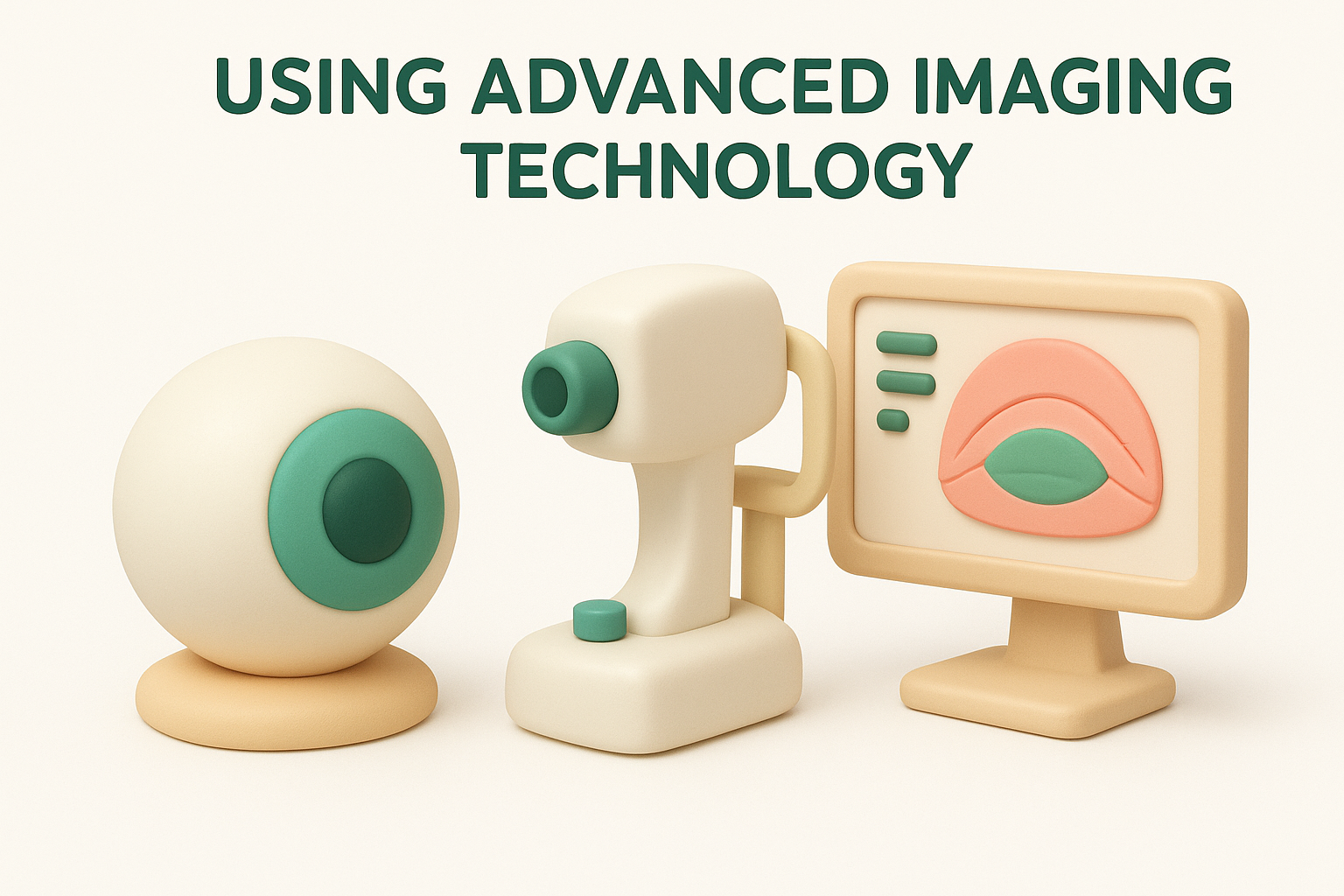
Advanced imaging allows surgeons to calculate lens power accurately even without your original LASIK records, using multiple data points to verify results.
Calculating the correct lens power
Your surgeon uses multiple calculation formulas specifically developed for eyes with prior laser correction. These formulas (such as Haigis-L, Barrett True-K, and others) adjust for your altered corneal power to predict the correct intraocular lens strength. Cross-checking results from several methods increases accuracy and reduces the risk of unexpected refractive errors after your cataract surgery.
Lens options and expected vision after surgery
You have several intraocular lens choices when planning cataract after LASIK eye surgery, though your previous laser correction influences which options work best. Your surgeon discusses your lifestyle needs and visual priorities to select the most appropriate lens type, considering factors like your corneal shape, eye health, and whether you want to reduce dependence on glasses.
Available lens choices
Monofocal lenses provide excellent distance vision and represent the most predictable option after previous LASIK. These lenses correct vision at one focal point, typically set for clear distance sight, though you’ll likely need reading glasses for close work. Your altered corneal shape makes premium multifocal or extended depth of focus lenses more challenging to predict, as these advanced options require extremely precise calculations to deliver their intended range of vision.
Toric lenses correct astigmatism alongside cataracts and work well for many post-LASIK patients who have residual or induced astigmatism. Your surgeon calculates the correct toric power and axis position using specialised measurements that account for your reshaped cornea. Most patients at Bright Sight Eye Specialists achieve clear, functional vision with appropriately selected monofocal or toric lenses.
What to expect from your vision
Your vision typically improves within days of surgery, with most people noticing clearer sight and brighter colours almost immediately. However, achieving perfect spectacle-free vision can be more challenging after previous LASIK compared to standard cataract surgery, as small calculation differences have larger effects on your final refractive outcome.
Realistic expectations are essential: whilst most patients achieve excellent functional vision, you may need glasses for certain tasks even with careful planning.
Your surgeon aims for your target refractive outcome, whether that’s clear distance vision or slight myopia for comfortable reading. Fine-tuning with glasses or contact lenses remains an option if your result differs slightly from planned.
Next steps for clearer vision
Managing cataract after LASIK eye surgery requires experienced surgeons who understand how your previous laser correction affects lens calculations and measurement accuracy. You don’t need to live with cloudy vision simply because you had refractive surgery decades ago. Modern measurement technology and specialised calculation methods make safe, predictable outcomes entirely possible when planning your cataract removal, regardless of your previous procedures.
At Bright Sight Eye Specialists in Randwick, Dr. Rahul Dubey and Dr. Capucine Odouard routinely perform cataract surgery on patients with prior LASIK, using advanced imaging and multiple verification techniques to ensure accurate lens selection for your unique eyes. Your journey to clearer vision starts with a comprehensive assessment of your eye health, detailed measurements, and an open discussion of your visual goals and lifestyle needs. Book a consultation to discuss your options and take the first step towards restoring your clarity and independence.