


You’re going through a rough patch at work, sleeping poorly, and then your vision starts to blur. It’s unsettling, and naturally, you want to know: can stress cause blurry vision? The short answer is yes. Stress triggers real physiological changes in your body, and your eyes are not immune to the effects.
When your nervous system is in overdrive, it can alter blood flow, muscle tension, and even fluid balance in and around the eye. These shifts may lead to temporary, and sometimes persistent, visual disturbances that range from mild blurriness to more specific conditions like central serous retinopathy. The key is understanding when symptoms are likely to pass on their own and when they need professional assessment.
At Bright Sight Eye Specialists in Randwick, our ophthalmologists, Dr Rahul Dubey and Dr Capucine Odouard, regularly see patients whose visual symptoms are linked to stress. This article breaks down exactly how stress affects your vision, what symptoms to watch for, and what you can do about it.
Can stress and anxiety really blur vision?
Yes, stress and anxiety genuinely can cause blurry vision, and it is not a sign that you are imagining things. Your body’s stress response is a whole-body event, not just a mental one, and the visual system is directly caught up in it.
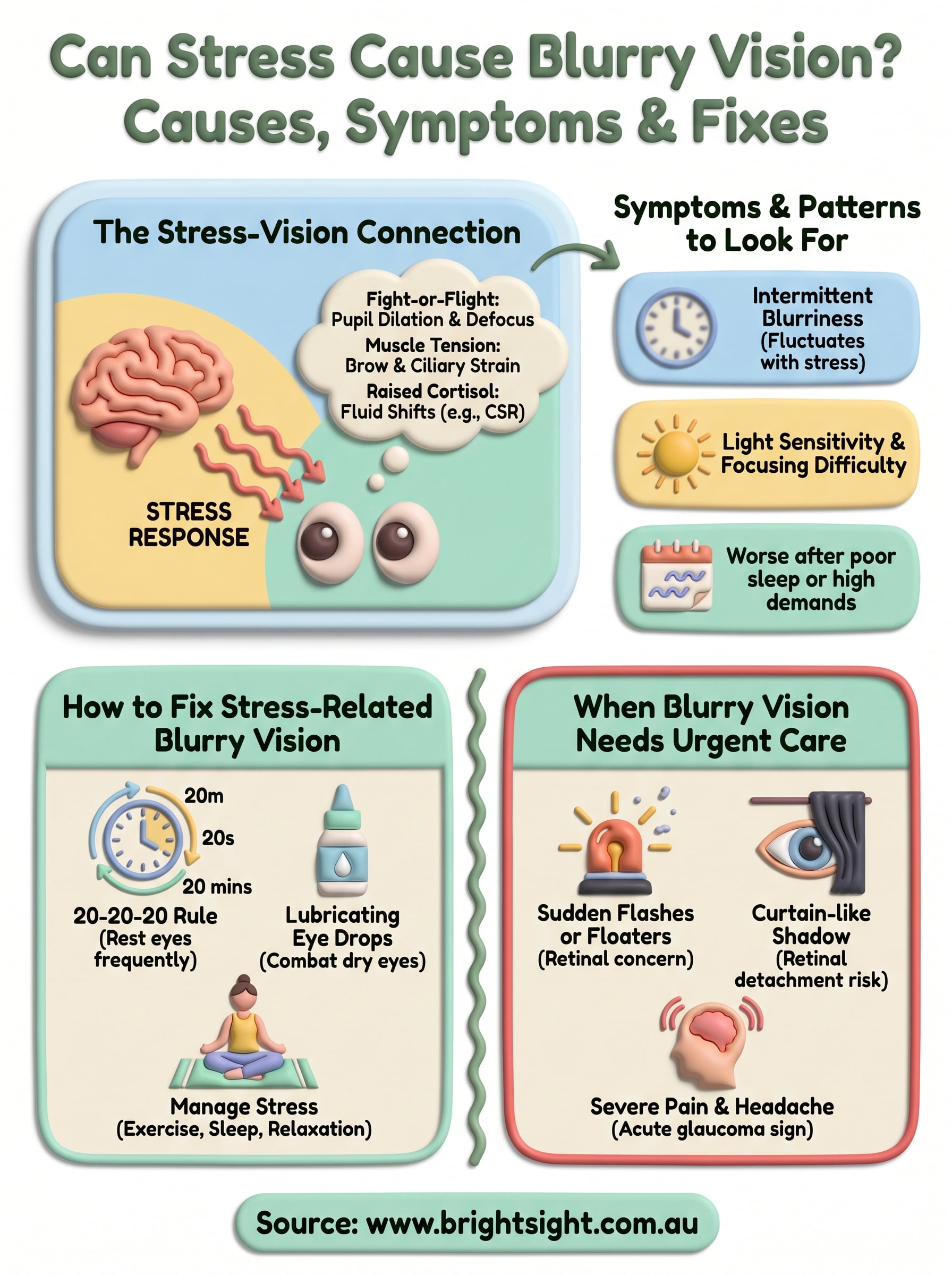
The fight-or-flight connection
When you perceive a threat, your brain activates the sympathetic nervous system, releasing hormones like adrenaline and cortisol. These hormones prepare your body to either fight or run, which means redirecting resources away from functions that are not immediately critical. Your pupils dilate rapidly to let in more light, which sounds helpful but can actually make your near vision temporarily unfocused and cause light sensitivity that contributes to blurriness.
Prolonged stress keeps this system switched on, meaning your eyes spend extended periods in a physiologically altered state. The muscles around your eye and in your brow can also tighten under chronic stress, adding physical strain that compounds visual disturbances.
Stress does not just affect how you feel. It changes measurable physiological processes, including ones that directly influence how clearly you see.
Anxiety as a separate but related trigger
Anxiety disorders can cause blurry vision through a slightly different route. Hyperventilation, which is common during anxiety attacks, changes the balance of oxygen and carbon dioxide in your blood. This can temporarily reduce blood flow to the brain and visual cortex, creating a blurred or tunnel-like quality to your vision.
People with chronic anxiety also tend to blink less frequently, increasing eye surface dryness. Dry eyes are one of the most common and overlooked causes of intermittent blurry vision, and when stress is the underlying driver, the symptom can persist for weeks without an obvious explanation.
What causes blurry vision during stress
Several mechanisms explain why stress affects your eyesight. Understanding them helps you identify whether stress is likely driving your symptoms.
Tension in the eye muscles
When your body is under stress, the ciliary muscles inside your eye, which control lens shape for focusing, can go into a kind of sustained contraction. This makes it harder to shift focus cleanly between near and distant objects, producing that blurry, unfocused sensation many people notice during stressful periods.
Your brow and temple muscles also tighten under stress, creating physical pressure around your eye socket. This muscular strain compounds the internal focusing problem, leaving your vision feeling fatigued and less sharp by the end of a demanding day.
Raised cortisol and fluid shifts
Chronic stress elevates cortisol levels over time, which affects the small blood vessels supplying your retina and choroid. In some cases, this disrupts fluid balance beneath the retina and contributes to central serous retinopathy, where fluid pools beneath the retina and distorts central vision.
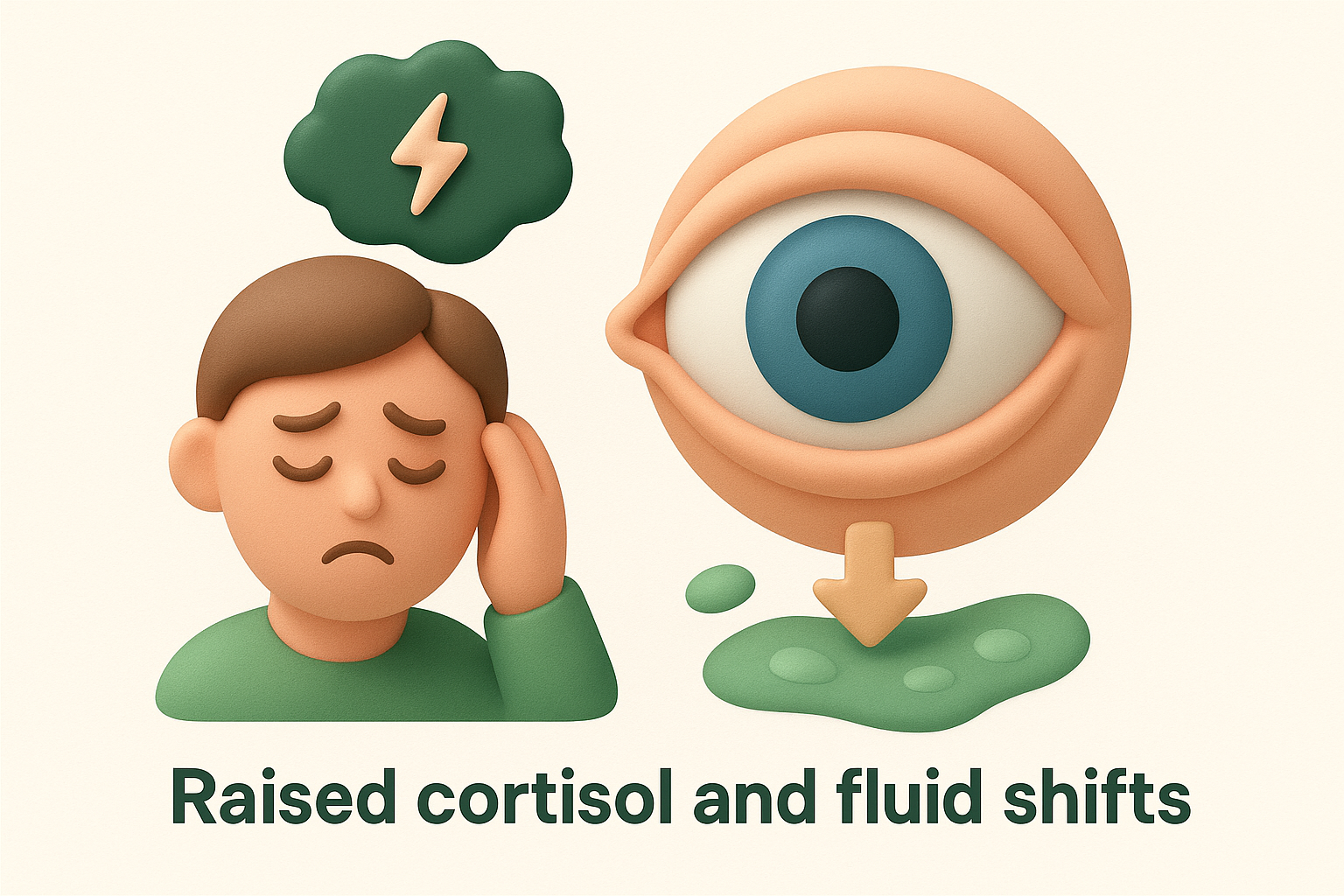
Raised cortisol can directly affect the blood-retinal barrier, making stress a medically recognised contributor to certain retinal conditions.
If you keep asking yourself can stress cause blurry vision that won’t clear up, this fluid-related mechanism is one of the stronger reasons to get your eyes properly assessed by an ophthalmologist.
Symptoms and patterns to look for
Stress-related blurry vision tends to follow recognisable patterns that set it apart from other eye conditions. Knowing what to watch for helps you decide whether the issue is likely to resolve with lifestyle changes or whether it needs formal investigation.
Visual symptoms that point to stress
The most common symptom is intermittent blurriness that comes and goes throughout the day, particularly during or after high-stress periods. You may also notice light sensitivity, a sense of visual fatigue, mild halos around lights, or difficulty shifting focus between near and far distances. Some people describe their vision as slightly foggy rather than sharply blurred.
If you are asking can stress cause blurry vision and your symptoms disappear during relaxed or rested periods, stress is a strong candidate.
Patterns that help confirm stress as the cause
The timing of your symptoms matters. Stress-driven vision changes typically worsen during demanding periods at work, after poor sleep, or during episodes of anxiety, then ease when you rest or decompress. If your blurry vision follows this cyclical pattern and both eyes are equally affected, a stress-related cause becomes more likely. Symptoms in only one eye, or vision loss that does not fluctuate, warrant prompt professional review.
How to fix stress-related blurry vision
Addressing stress-related blurry vision means targeting both the eye-level symptoms and the underlying stress driving them. Neither approach alone is enough for lasting improvement.
Reduce physical eye strain
If you spend long hours on screens, follow the 20-20-20 rule: every 20 minutes, look at something 20 metres away for 20 seconds. This gives your ciliary muscles a chance to release tension and reset. Lubricating eye drops can also help if dry eyes are contributing to your blurriness, particularly if you know you blink less during anxious or focused periods.
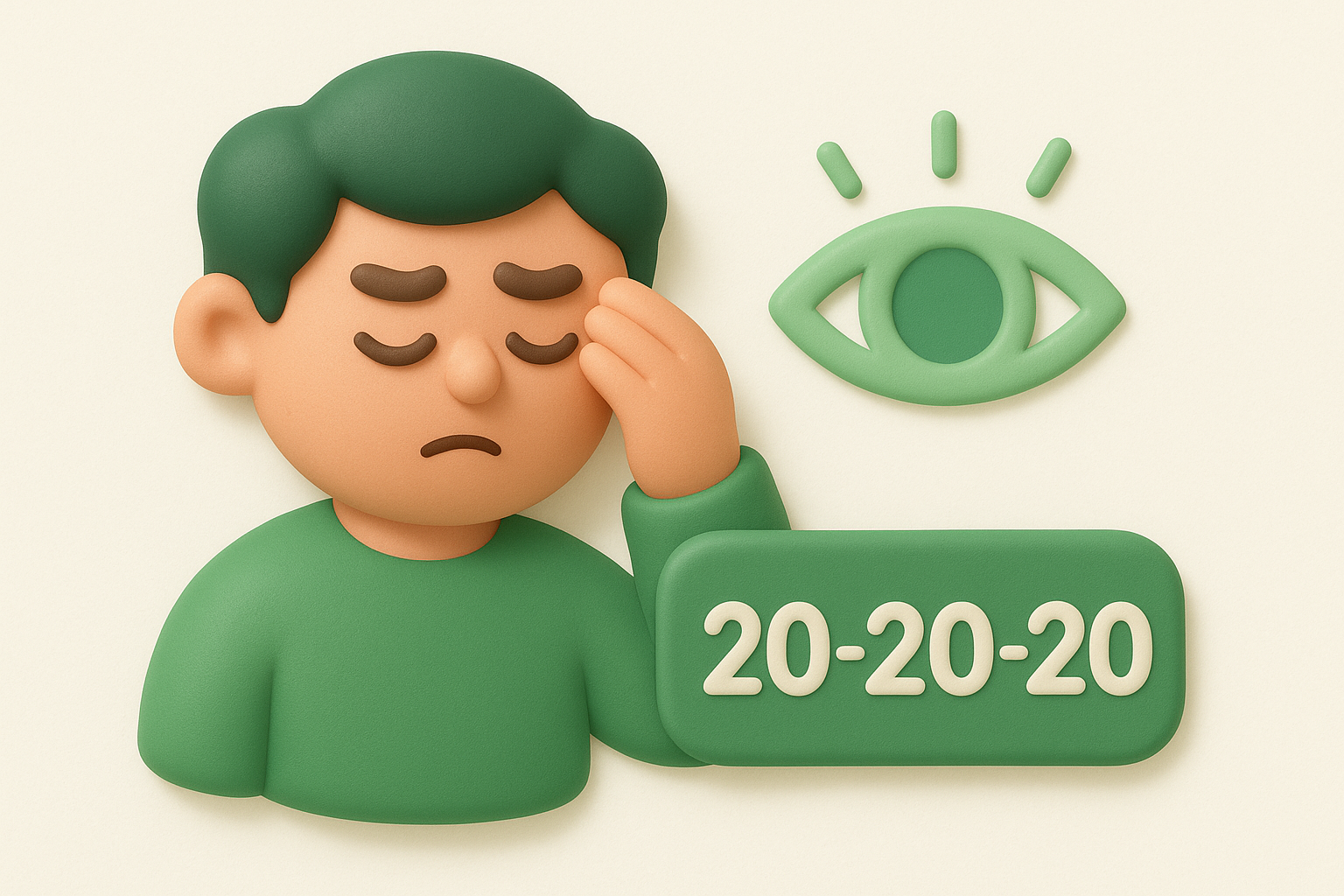
Combining eye strain relief with stress management gives you the best chance of resolving symptoms without medication.
Manage the stress response directly
Reducing cortisol and calming your sympathetic nervous system makes a direct difference to how your visual system functions. Regular physical exercise, adequate sleep, and structured breathing techniques all help bring your body out of a prolonged fight-or-flight state. If you can stress cause blurry vision to ease by consistently lowering your baseline stress levels, the eye symptoms often follow.
Structured relaxation practices, such as progressive muscle relaxation, specifically target the tension in your brow and eye muscles, which compounds visual fatigue during high-stress periods.
When blurry vision needs urgent care
Stress can absolutely explain transient, fluctuating vision changes, but not all blurry vision is benign. Some symptoms point to conditions that need same-day assessment, and waiting to see if they pass on their own can result in permanent visual damage.
Symptoms that need same-day assessment
If your vision blurs suddenly in one eye without any obvious trigger, or you notice a curtain-like shadow moving across your field of view, seek urgent ophthalmology review immediately. These symptoms can indicate retinal detachment, a medical emergency that requires prompt surgical intervention.
Warning signs that warrant same-day assessment include:
- Sudden vision loss in one or both eyes
- A significant increase in floaters or flashes of light
- Double vision appearing without warning
- A grey or dark curtain across part of your visual field
Red flags you should never ignore
Even if you suspect stress is the cause, certain presentations go beyond what stress alone can explain. Blurry vision combined with a severe headache, nausea, or eye pain may indicate acute angle-closure glaucoma, which requires emergency treatment. If you are trying to confirm can stress cause blurry vision but your symptoms are worsening rather than fluctuating, that is a clear signal to book an urgent eye examination rather than waiting.
When in doubt, have your eyes examined. A serious condition ruled out quickly is always better than one discovered late.
Next steps
So, can stress cause blurry vision? Yes, it can, and in several distinct ways: through muscle tension, cortisol-driven fluid changes, dry eyes, and hyperventilation during anxiety. Most stress-related visual symptoms ease when you address the underlying stress, reduce screen strain, and give your eyes adequate rest. The 20-20-20 rule, lubricating drops, and consistent stress management are practical starting points you can act on today.
That said, not every episode of blurry vision has a simple explanation. If your symptoms are persistent, worsening, or affecting only one eye, getting a professional eye examination is the right move rather than guessing. Catching a serious condition early makes a real difference to your outcome.
At Bright Sight Eye Specialists in Randwick, Dr Rahul Dubey and Dr Capucine Odouard provide thorough assessments that look beyond surface symptoms to identify what is actually driving your visual changes. Book an appointment with our team and get a clear answer.