


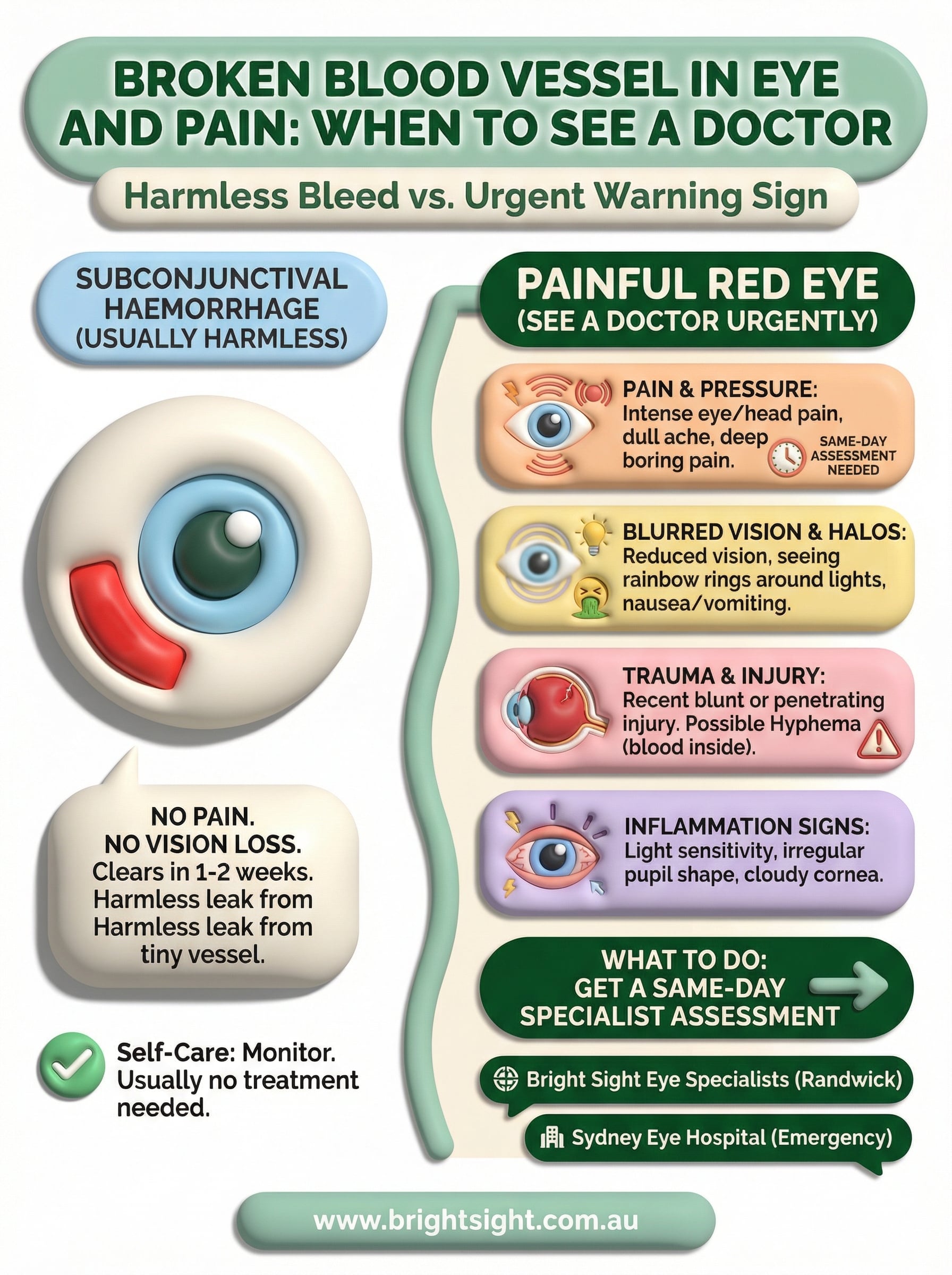
A red patch on the white of your eye is usually a subconjunctival haemorrhage, a harmless leak from a tiny blood vessel that clears on its own within a week or two. But if you’re experiencing a broken blood vessel in eye and pain, that changes things. Pain isn’t a typical feature of a simple subconjunctival haemorrhage, and its presence can point to something that needs prompt medical attention, such as a hyphema, acute glaucoma, or an underlying injury.
Knowing the difference between a cosmetic concern and a genuine warning sign matters. Some causes resolve without treatment, while others can threaten your vision permanently if left unchecked. The key is understanding what your symptoms actually mean, and acting quickly when they demand it.
At Bright Sight Eye Specialists in Randwick, Dr Rahul Dubey and Dr Capucine Odouard regularly assess and manage acute eye conditions across Sydney’s Eastern Suburbs. In this article, we’ll walk you through the common and serious causes of a painful red eye, the symptoms that should prompt an urgent visit, and what to expect during an examination.
Why pain matters with a blood-red eye
A straightforward subconjunctival haemorrhage looks alarming but feels like nothing at all. The blood sits between the clear conjunctiva and the white sclera, so there are no nerve endings being irritated and you typically feel no discomfort whatsoever. If you are dealing with a broken blood vessel in eye and pain at the same time, that pain is telling you something important: your eye is under stress from a cause that goes beyond a simple surface bleed.
When pain signals a deeper problem
Pain in a red eye usually points to pressure, inflammation, or direct tissue damage occurring inside or around the eye. Several distinct conditions can produce this combination, and each one carries a different level of urgency:
- Acute angle-closure glaucoma: sudden intense pressure pain, blurred vision, nausea, and halos around lights. This is a same-day emergency.
- Uveitis: inflammation of the middle layer of the eye, producing a dull ache and light sensitivity alongside redness.
- Scleritis: a deep, boring pain in the eye wall that often wakes people at night and can signal an underlying systemic condition.
- Corneal abrasion or ulcer: sharp surface pain with redness and watering, usually after injury or extended contact lens wear.
If your red eye comes with pain, blurred vision, or nausea, treat it as urgent and get a professional assessment the same day.
Hyphema: blood inside the eye
A hyphema is a collection of blood in the anterior chamber, the fluid-filled space between your cornea and iris. Unlike a surface haemorrhage, a hyphema develops after a significant blunt or penetrating eye injury. You may see a visible red layer across the lower part of your iris, or the bleed may be too small to detect without a slit-lamp examination. Pain, raised intraocular pressure, and light sensitivity are all common features.

Left unmanaged, a hyphema carries the risk of corneal blood staining and secondary glaucoma, both of which can cause lasting vision impairment. Any history of eye trauma combined with pain and redness warrants prompt specialist review rather than a watch-and-wait approach.
How to do a quick self-check at home
Before you call a specialist or head to emergency, a few simple observations can help you work out what’s going on. Stand in front of a well-lit mirror and look closely at both eyes. You’re trying to determine whether what you see and feel matches a harmless surface bleed or something that needs urgent attention.
What to look for and what to worry about
Start by checking where the red area sits. A straightforward subconjunctival haemorrhage shows up as a flat, bright red patch confined to the white of your eye, with a sharp and clearly defined edge. Your cornea should appear clear, your vision sharp, and you should feel no aching, throbbing, or light sensitivity whatsoever.
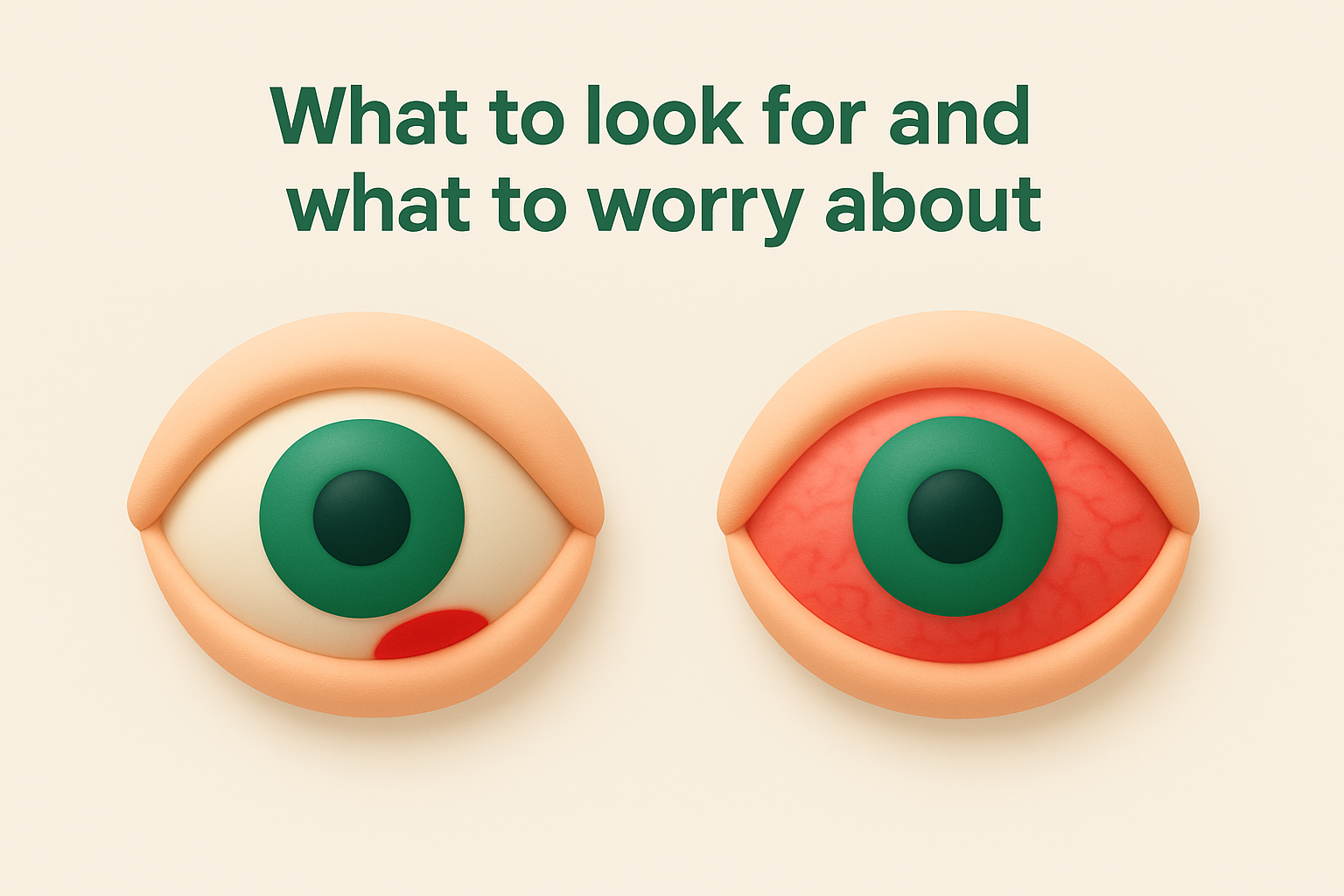
When you’re dealing with a broken blood vessel in eye and pain, look specifically for signs that rule out a simple surface bleed. Check whether your cornea appears cloudy or hazy, which can signal raised intraocular pressure or a corneal problem. Look at your pupil and note if it appears irregular in shape or responds sluggishly to light. Also pay attention to whether the redness covers the entire eye rather than sitting as a contained patch, and whether your vision feels at all blurry or distorted.
If your self-check turns up any of these warning signs alongside pain, don’t wait to see if things improve on their own.
When to seek urgent help in Australia
Australia has good access to emergency eye care, but knowing where to go and how fast to move can make the difference between full recovery and permanent vision loss. If you are dealing with a broken blood vessel in eye and pain, your next step depends on which symptoms are present alongside the redness.
Symptoms that require same-day care
Certain combinations of symptoms mean you should not wait for a routine appointment. Contact an eye specialist or present to an emergency department on the same day if you experience any of the following:
- Sudden, intense eye or head pain
- Blurred or reduced vision in either eye
- Halos or rainbow rings around lights
- Nausea or vomiting alongside eye pain
- A visible change in your pupil shape
- Any recent blunt or penetrating eye injury
Do not drive yourself if your vision is significantly affected; ask someone to take you or call 000.
Where to get help in Sydney
If you are in Sydney’s Eastern Suburbs, Bright Sight Eye Specialists in Randwick offers specialist assessment for acute eye conditions. For out-of-hours emergencies, Sydney Eye Hospital on Macquarie Street runs a 24-hour emergency department staffed by ophthalmologists. Presenting there with a referral letter from your GP can help you access the right level of care faster.
Conditions that mimic a simple blood spot
Not every red eye with discomfort is a subconjunctival haemorrhage, and several conditions produce a similar appearance while carrying very different implications. When you’re assessing a broken blood vessel in eye and pain, ruling out these look-alikes matters as much as identifying the actual cause.
Episcleritis
Episcleritis causes redness and mild tenderness in a specific sector of the white eye, making it easy to confuse with a surface bleed. Unlike a haemorrhage, the redness comes from dilated blood vessels rather than leaked blood, so the colour tends to be pink or salmon rather than a vivid red patch.
Recurrent episodes can sometimes signal an underlying inflammatory or autoimmune condition, so repeated bouts are worth investigating with your eye specialist rather than dismissing as a nuisance.
Conjunctivitis
Bacterial and viral conjunctivitis both produce a red, irritated eye, often with discharge and a gritty sensation. The redness covers the entire conjunctival surface rather than appearing as a contained spot, which helps distinguish it from a haemorrhage on close inspection.
If your red eye comes with discharge, crusting, or spreads to the other eye within days, conjunctivitis is a more likely culprit than a haemorrhage.
Allergic conjunctivitis adds intense itching to the picture, which helps separate it from other causes, though a specialist examination remains the most reliable way to confirm any diagnosis.
What to expect at an eye specialist visit
If you arrive at an eye specialist with a broken blood vessel in eye and pain, the assessment moves quickly and follows a clear sequence. Your specialist will start by taking a detailed history, asking about how the redness appeared, whether you experienced any trauma, and what other symptoms accompany the pain.
The examination process
Your specialist will measure your intraocular pressure using a tonometer, as raised pressure is one of the most important things to rule out in a painful red eye. They will then examine your eye under a slit-lamp microscope, which gives a magnified, detailed view of the cornea, anterior chamber, iris, and lens. This examination takes only a few minutes and requires you to rest your chin on a support while a bright light is directed at your eye.
The slit-lamp view gives far more information than any home assessment, which is why specialist review matters when pain is present.
What happens next
Once your specialist identifies the cause, treatment options are discussed clearly and directly with you on the same visit. For conditions like uveitis or scleritis, prescription eye drops or oral anti-inflammatory medication may be started immediately. If a hyphema or elevated pressure is found, your specialist will outline a management plan and advise whether same-day or follow-up surgery is required.
What to do now
A broken blood vessel in eye and pain is not a combination to dismiss. If the redness appears alone with no other symptoms, monitor it over the next week or two and it will likely clear on its own. But if pain, blurred vision, or pressure accompanies that red eye, you need a specialist’s assessment that same day.
Your vision is worth protecting now rather than waiting to see how things unfold. Conditions like acute glaucoma, hyphema, and scleritis can escalate quickly, and early treatment consistently delivers better outcomes than delayed care. A straightforward slit-lamp examination often resolves the uncertainty within minutes.
If you are in Sydney’s Eastern Suburbs and want to be seen by an experienced eye specialist, book an appointment with Bright Sight Eye Specialists. Dr Rahul Dubey and Dr Capucine Odouard provide prompt, thorough assessments for acute eye conditions in Randwick.