


A red, irritated eye might seem like nothing more than a late night or a bit of dust. But if you live with diabetes, that redness could be telling you something far more significant. The connection between a bloodshot eye and diabetes is one that many people overlook, yet it can be an early signal that high blood sugar is affecting the delicate blood vessels inside your eyes.
Diabetes damages small blood vessels throughout the body, and the eyes are particularly vulnerable. Over time, weakened or leaking vessels in the retina can cause visible redness, blurred vision, and, if left unchecked, serious conditions like diabetic retinopathy. The challenge is that these changes often develop gradually, with little or no pain in the early stages, making them easy to dismiss.
At Bright Sight Eye Specialists in Randwick, Dr Rahul Dubey and Dr Capucine Odouard regularly treat patients with diabetes-related eye complications, from early-stage vessel changes through to intravitreal injections and retinal surgery. This article explains why diabetes causes bloodshot eyes, when redness warrants concern, and the steps you can take to protect your sight before damage becomes permanent.
What a bloodshot eye means
A bloodshot eye occurs when the small blood vessels on the surface of your eye, known as the conjunctival vessels, become dilated or inflamed. These vessels are normally barely visible, but when they widen or break, they produce that distinctive red or pink appearance across the white part of your eye, called the sclera. Redness is a symptom, not a diagnosis, which means identifying what is driving it matters far more than treating the colour itself.
The anatomy behind the redness
Your eye’s surface is covered by a thin, transparent membrane called the conjunctiva, which is densely packed with tiny blood vessels. When something irritates or inflames this membrane, those vessels expand to increase blood flow to the area. In more serious cases, a vessel can rupture entirely, flooding the white of the eye with a pool of blood in a condition called a subconjunctival haemorrhage. That can look alarming but is often harmless on its own. However, when you are managing diabetes, any visible change in the blood vessels of your eyes deserves a closer look rather than a wait-and-see approach.

Redness in someone with diabetes is not automatically serious, but the eyes are one of the first places where blood vessel damage becomes visible, making any new or persistent redness worth investigating promptly.
Common triggers not related to diabetes
Understanding the full range of causes helps you put the link between a bloodshot eye and diabetes into proper context. Many triggers are short-lived and straightforward to treat. Knowing these helps you recognise when something more significant might be at play.
Common non-diabetes-related causes include:
- Dry eye, especially in air-conditioned offices or during long screen sessions
- Allergic conjunctivitis, triggered by pollen, dust mites, or animal dander
- Bacterial or viral conjunctivitis, which often involves discharge or crusting
- Eye strain from extended screen use or poor lighting conditions
- Subconjunctival haemorrhage caused by coughing, sneezing, or heavy lifting
How diabetes can lead to red eyes
When your blood glucose levels stay elevated over time, the walls of your smallest blood vessels begin to weaken and break down. This process affects blood vessels throughout your body, but the eyes are particularly vulnerable because their vessels are among the finest and most delicate in the human body. The result can range from mild, persistent redness to sudden, visible bleeding inside the eye.
High blood sugar and vessel wall breakdown
Sustained high glucose damages the cells lining your blood vessel walls, making them fragile, leaky, and prone to swelling. As these vessels lose their structural integrity, they can bulge outward in small pouches called microaneurysms, allow fluid to seep into surrounding tissue, or rupture entirely. Your immune system responds to this damage with inflammation, which widens nearby vessels and contributes directly to the redness you see on the surface of the eye.
The link between a bloodshot eye and diabetes is rooted in this same vessel damage process, just occurring at different layers of the eye.
Why the eyes show damage early
Your eye is one of the few places in the body where blood vessels can be observed directly without invasive tools. Because the retina and conjunctiva have such a rich and fine vascular network, even minor vessel changes become visible earlier than in most other tissues, which is why regular eye examinations carry so much weight for anyone managing diabetes.
Conditions to rule out in people with diabetes
Not every case of bloodshot eye and diabetes points directly to retinal disease. Several other conditions can cause redness in people with diabetes, and some of them carry their own risks. Identifying the actual cause helps your eye specialist choose the right treatment and avoid missing something that needs urgent attention.
Conjunctivitis and surface infections
People with poorly controlled blood glucose are more susceptible to infections because elevated sugar levels impair immune function. Bacterial conjunctivitis, in particular, can spread quickly and become harder to resolve if your blood sugar remains high during treatment. You may notice discharge, crusting around the eyelids, or a gritty feeling alongside the redness, which helps distinguish it from an internal vascular issue.
If you have diabetes and develop an eye infection, managing your blood glucose during recovery directly affects how quickly the infection clears.
Dry eye disease
Dry eye is significantly more common in people with diabetes than in the general population, partly because diabetic nerve damage can reduce tear production and reduce the sensitivity of the cornea. You might not even notice the dryness itself, since the associated redness and surface irritation often appear first. Artificial tears can relieve symptoms, but your eye specialist should still assess whether the dryness reflects underlying nerve involvement before settling on a long-term management plan.
Is it a sign of diabetic retinopathy?
Redness alone does not confirm diabetic retinopathy, but persistent or sudden redness in someone with a diabetes diagnosis should always prompt a proper eye examination. Diabetic retinopathy develops when long-term high blood sugar progressively damages the retinal blood vessels, causing them to leak, grow abnormally, or bleed into the vitreous cavity at the back of the eye.
When redness points to something deeper
The connection between bloodshot eye and diabetes becomes more significant when redness appears alongside other changes. If those damaged retinal vessels bleed into the vitreous, you may notice a sudden reddish haze or a dramatic increase in floaters, both of which indicate that the retinopathy has reached a more advanced stage. At that point, the redness you see reflects internal bleeding rather than simple surface irritation.
Floaters, blurred vision, or a sudden dark patch alongside red eyes in a person with diabetes should be treated as urgent until a specialist says otherwise.
The role of new blood vessel growth
Advanced diabetic retinopathy can trigger abnormal new vessels to grow across the surface of the iris, a condition called rubeosis iridis, which causes a distinctly reddish discolouration of the iris itself. These new vessels are fragile and can raise pressure inside the eye, leading to neovascular glaucoma, a serious complication that requires prompt intervention to preserve your sight.
When to act and who to see
The combination of bloodshot eye and diabetes is not something to log for your next routine appointment if you are also experiencing vision changes. Acting quickly gives your specialist the best chance of intervening before damage becomes permanent. The sooner you seek assessment, the more treatment options remain available.
Signs that need same-day attention
Certain symptoms require you to contact an eye specialist or present to an emergency eye service on the same day. Do not wait if you experience any of the following alongside redness:

- A sudden increase in floaters or flashes of light
- A dark curtain or shadow moving across your vision
- A rapid decline in central or peripheral vision
- Severe eye pain or a noticeably red iris
Sudden visual loss combined with red eyes in a person with diabetes is a medical emergency until proven otherwise.
The right specialist for diabetes-related eye concerns
Your optometrist can screen for early changes, but if redness persists or vision is affected, you need a medical retinal specialist or ophthalmologist with direct experience managing diabetic eye disease. At Bright Sight Eye Specialists in Randwick, Dr Rahul Dubey and Dr Capucine Odouard provide specialist-level assessment, imaging, and treatment for the full range of diabetic eye complications, including intravitreal injections, laser therapy, and vitreoretinal surgery where needed.
Key takeaways and next steps
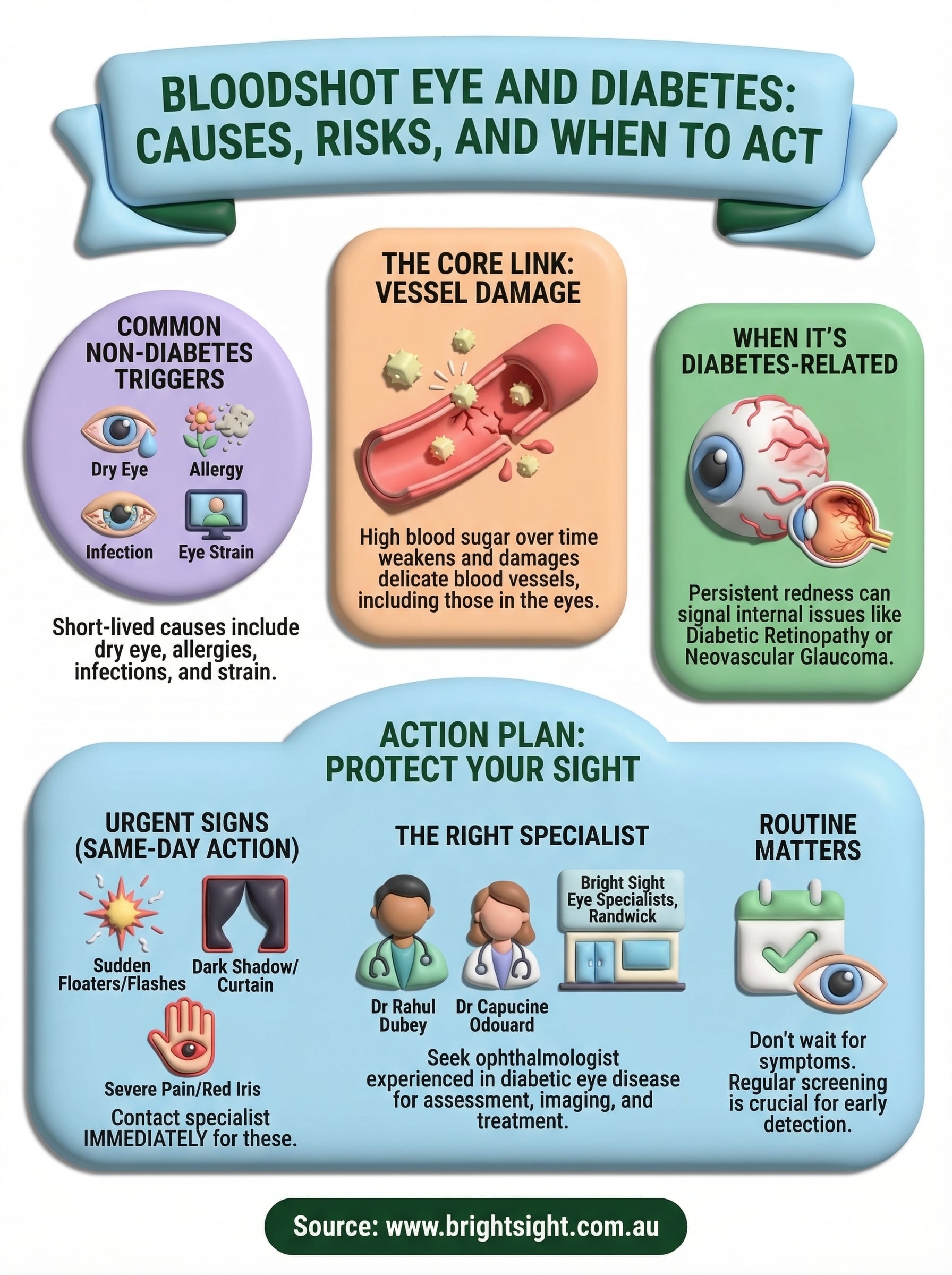
The link between bloodshot eye and diabetes is rooted in the same underlying process: high blood sugar weakening and damaging small blood vessels over time. Surface redness can reflect anything from dry eye or infection to advanced retinal disease, and the only way to know which one you are dealing with is a proper specialist examination. Conditions like diabetic retinopathy, rubeosis iridis, and neovascular glaucoma can all begin quietly, with redness or minor visual changes as the first sign.
Your most important step is to not wait for symptoms to worsen before acting. Routine screening catches problems early, when treatment is most effective and vision loss is still preventable. If you have diabetes and are noticing persistent redness, new floaters, or any change in your vision, book an assessment with a specialist who understands diabetic eye disease. Contact Bright Sight Eye Specialists in Randwick to arrange an appointment with Dr Rahul Dubey or Dr Capucine Odouard today.