


A bleeding eyeball happens when a blood vessel breaks inside or on the surface of your eye. The most common type is a subconjunctival hemorrhage, where blood pools under the clear tissue covering the white of your eye. This creates a bright red patch that looks far worse than it actually is. In most cases, the bleeding is painless and won’t affect your vision.
The sight of blood in your eye can be frightening. You might wonder if you need emergency care or if permanent damage has occurred. Most eye bleeds resolve on their own within a week or two, but certain situations require immediate medical attention. Pain, vision changes, or bleeding that follows an injury are all reasons to contact your eye specialist straight away.
This article covers the main causes of eye bleeding, from minor vessel ruptures to more serious conditions. You’ll learn which symptoms warrant professional care and which ones you can safely monitor at home. We’ll also explain how specialists diagnose and treat different types of eye bleeds, so you know what to expect if you need help.
Why a bleeding eyeball needs attention
You need to assess any eye bleeding promptly because the appearance alone doesn’t tell you how serious it is. A bright red patch might be harmless, whilst a subtle bleed deep inside your eye could signal a serious problem. Most subconjunctival hemorrhages clear up without treatment, but other types of bleeding require immediate care. The key difference lies in where the blood collects and what caused it to happen.

When eye bleeding signals a serious problem
Your eye contains delicate structures that bleeding can damage permanently if left untreated. A hyphema, where blood pools between your cornea and iris, can raise your eye pressure to dangerous levels. Bleeding behind the retina can threaten your central vision, particularly if you have diabetes or high blood pressure. Understanding bleeding eyeball causes helps you recognise which situations need urgent specialist care.
Bleeding that follows trauma, causes pain, or changes your vision requires same-day assessment by an eye specialist.
Risk factors that increase complications
Certain health conditions make eye bleeding more likely to cause lasting problems. If you take blood thinners like warfarin, even a minor bleed can spread and take longer to resolve. Diabetes and hypertension weaken your blood vessels, making them prone to rupture and bleed. People with clotting disorders face a higher risk of severe bleeding inside the eye. Your optometrist or GP can refer you to an eye specialist if you have these risk factors and develop any type of eye bleed.
How to respond to a bleeding eyeball
When you notice blood in your eye, your first step is to stay calm and assess the situation. Most eye bleeds look dramatic but cause no lasting harm. Check for pain, vision changes, or recent trauma to determine how urgently you need care. If you have no pain and can see clearly, you can safely monitor the bleeding at home. If you experience sharp pain, blurred vision, or the bleeding followed an injury, contact an eye specialist immediately.
Immediate steps to take
Stop what you’re doing and examine your eye in good lighting. Look for the exact location of the blood and note whether it covers a small area or spreads across most of the white part. Take a photo with your phone so you can track whether the bleeding grows or shrinks over the next few hours. This documentation helps your specialist understand how quickly the condition developed if you need an assessment.

Apply a cool compress to your closed eyelid for 10 minutes if you feel any mild irritation or puffiness. The coolness reduces inflammation without affecting the blood already present under the conjunctiva. You can use artificial tears to relieve any scratchy sensation, but avoid rubbing your eye as this might worsen the bleeding. Understanding bleeding eyeball causes helps you know that physical pressure often triggers these episodes, so additional rubbing could enlarge the affected area.
Contact an eye specialist the same day if you have diabetes, take blood thinners, or experience repeated episodes of eye bleeding.
What to avoid after eye bleeding occurs
Never use aspirin or other blood-thinning medications without checking with your doctor first, as these can extend the time it takes for the bleeding to resolve. If you already take prescribed anticoagulants, continue them as directed and inform your specialist about the eye bleed. Avoid strenuous exercise, heavy lifting, or bending forward for at least 24 hours, as these activities raise blood pressure temporarily and could trigger additional bleeding.
Skip wearing contact lenses until the blood clears completely, even if the bleeding seems minor. Lenses can irritate the affected area and slow healing. You should also avoid swimming pools and spas during the recovery period, as chlorine and bacteria increase your risk of developing an infection whilst the blood vessel heals.
Common causes of a bleeding eyeball
Understanding what triggers eye bleeding helps you determine whether your situation needs immediate attention or will resolve on its own. The vast majority of eye bleeds stem from everyday activities that briefly raise the pressure in your blood vessels. Simple actions like coughing or sneezing can rupture a tiny vessel in the conjunctiva without you realising it happened. Other bleeding eyeball causes include underlying health conditions that weaken your blood vessels or medications that prevent normal clotting.
Minor trauma and physical strain
Everyday physical activities cause most subconjunctival hemorrhages you’ll encounter. Coughing, sneezing, or vomiting creates a sudden spike in pressure that forces blood through weak spots in vessel walls. Straining during bowel movements produces the same effect, particularly if you’re constipated. You might also trigger bleeding by rubbing your eyes too vigorously, especially if you have dry or irritated eyes.
Heavy lifting, intense exercise, or bending forward for extended periods raises the blood pressure in your head and eyes temporarily. This pressure surge can rupture delicate conjunctival vessels, leaving you with a red patch that appears without warning. Contact lens wearers face higher risk because the lenses can create friction against the conjunctiva, particularly if you don’t clean them properly or wear them beyond their recommended schedule.
Most eye bleeds from physical strain resolve completely within two weeks without any treatment or lasting effects on your vision.
Medical conditions that weaken blood vessels
Diabetes damages blood vessels throughout your body, including those in your eyes. High blood sugar levels weaken vessel walls over time, making them prone to rupture even without obvious trauma. Hypertension creates similar problems by placing constant stress on your blood vessels. If you have either condition and develop eye bleeding, your specialist will want to examine you promptly to rule out more serious bleeding inside the eye.

Blood clotting disorders like hemophilia or von Willebrand disease prevent your blood from forming stable clots when vessels break. These conditions turn minor bleeds into larger ones that take weeks to clear. Anemia and thrombocytopenia also affect your blood’s ability to clot properly, increasing both the frequency and severity of eye bleeds you experience.
Medications that increase bleeding risk
Blood thinners like warfarin, heparin, and apixaban prevent clot formation to protect you from strokes and heart attacks. These medications also make eye bleeds more likely and longer-lasting. Aspirin and other anti-inflammatory drugs have similar effects, even though people often don’t think of them as blood thinners. If you take any of these medications, tell your eye specialist about even minor bleeds.
Eye-specific conditions and injuries
Direct trauma to your eye from a ball, fist, or foreign object can cause bleeding in different parts of the eye. A blow that’s strong enough might create a hyphema rather than just a subconjunctival hemorrhage. Eye surgery, including cataract removal or laser procedures, temporarily increases your bleeding risk as the surgical sites heal. Inflammation of the conjunctiva from infections or allergies also makes blood vessels more fragile and prone to rupture.
Symptoms and warning signs to watch for
Most eye bleeds produce only visible symptoms without pain or vision problems. You’ll notice a bright red patch on the white of your eye that might look shocking but feels completely normal. The affected area may feel slightly scratchy or gritty, similar to having dry eyes, but this mild irritation shouldn’t worsen or interfere with your daily activities. Tracking which symptoms appear helps you determine whether you need professional assessment or can safely wait for the bleeding to resolve.
Normal symptoms that resolve on their own
A painless red patch that stays confined to one area signals a typical subconjunctival hemorrhage. You might notice the blood spreads slightly over the first day before it stabilises and begins to fade. Your vision should remain completely clear, and you shouldn’t experience any discharge from the affected eye. The redness may look worse in the morning after sleeping flat, but this pattern is normal and doesn’t indicate a problem.
Mild itching or a sensation that something’s in your eye typically accompanies the visible blood without signalling danger. These symptoms occur because the blood under the conjunctiva creates slight swelling that your eye perceives as irritation. Understanding bleeding eyeball causes helps you recognise these normal responses.
Red flags requiring immediate care
Sharp pain in or around your eye demands same-day specialist assessment, regardless of how much blood you can see. Pain suggests the bleeding affects deeper structures or accompanies increased pressure inside your eye. Blurred vision, double vision, or blind spots indicate serious bleeding that threatens your sight.
Contact an eye specialist immediately if you experience pain, vision changes, or bleeding that follows head trauma or eye injury.
Bleeding from both eyes simultaneously or repeated bleeds within a short timeframe point to underlying clotting problems that need investigation. Large amounts of blood that obscure most of your eye’s white surface also warrant prompt professional care.
How eye specialists diagnose and treat eye bleeding
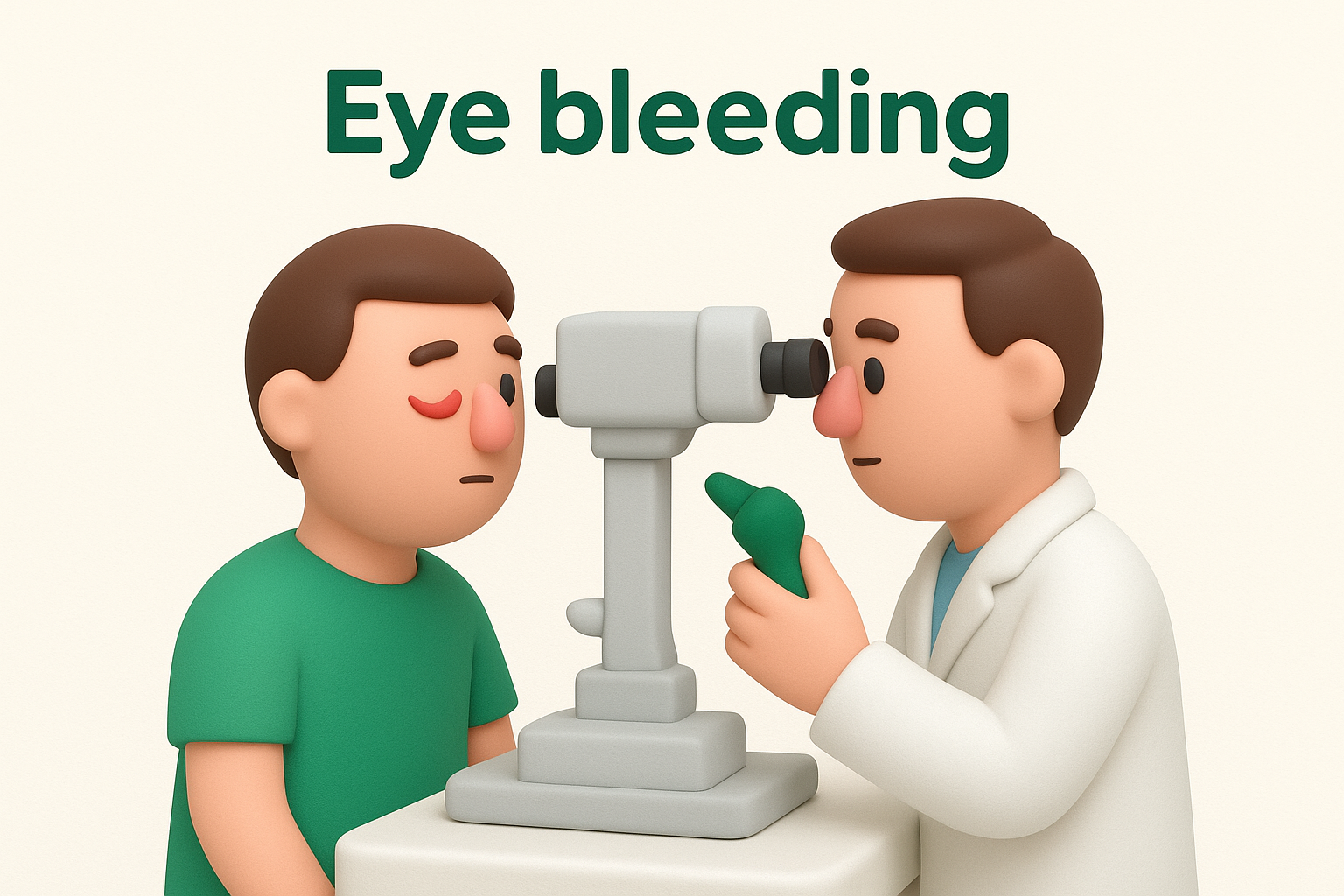
Your eye specialist begins by examining the affected eye with a slit lamp microscope to determine where the blood has collected and assess whether deeper structures are involved. This detailed examination shows whether you have a simple subconjunctival hemorrhage or a more serious condition like a hyphema or vitreous hemorrhage. The specialist also checks your eye pressure using tonometry to rule out complications that could threaten your vision.
Initial examination and diagnostic tests
Your specialist asks about recent trauma, straining activities, and any medications you take before examining your eye. They’ll dilate your pupils with drops to inspect your retina and check for bleeding behind the eye that isn’t visible from the outside. Blood pressure measurement forms part of the assessment because hypertension frequently contributes to spontaneous eye bleeds.
If your medical history suggests a bleeding disorder or you’ve experienced multiple episodes, your specialist may order blood tests to check your clotting function and platelet count. These tests identify underlying conditions that need treatment to prevent future bleeds. Understanding bleeding eyeball causes through proper diagnosis helps your specialist develop an effective treatment plan.
Treatment approaches for subconjunctival hemorrhage
Most subconjunctival hemorrhages require no treatment beyond reassurance and observation, as they resolve completely within one to two weeks. Your specialist may recommend artificial tears if you experience mild irritation or grittiness. The blood will gradually fade through colour changes, similar to a bruise healing, progressing from bright red to orange, yellow, and eventually disappearing.
If bleeding occurs due to an underlying condition like diabetes or hypertension, treating that condition becomes the priority to prevent future episodes.
Managing more serious eye bleeds
Hyphemas need more aggressive intervention because blood in the anterior chamber can block drainage and raise eye pressure. Your specialist prescribes pressure-lowering drops and may recommend wearing an eye shield to protect against further trauma. You’ll need to keep your head elevated even whilst sleeping to help the blood settle and drain properly.
Vitreous hemorrhages often clear slowly over several weeks or months. Your specialist monitors these bleeds with regular ultrasound examinations if the blood prevents clear visualisation of your retina. Surgery becomes necessary if the blood doesn’t clear or if the bleeding resulted from a retinal tear that needs repair.
Recovery timeline and follow-up care
Simple subconjunctival hemorrhages heal completely without scarring or vision loss within two weeks. Your specialist schedules follow-up visits only if complications develop or if you have risk factors requiring monitoring. More serious bleeds involving the anterior chamber or vitreous cavity need weekly assessments until the blood clears and your eye pressure stabilises.
You’ll receive specific instructions about activity restrictions based on the type and severity of your bleed. Avoiding heavy lifting, straining, and blood-thinning medications helps prevent rebleeding during the critical healing period. Your specialist coordinates with your GP if medication adjustments are needed to balance your overall health needs with eye healing requirements.

Key takeaways
Most eye bleeds look alarming but resolve without treatment in one to two weeks. Subconjunctival hemorrhages account for the majority of visible blood in the eye and rarely cause complications. Understanding bleeding eyeball causes helps you distinguish between harmless vessel ruptures and conditions requiring immediate care.
Contact an eye specialist if you experience pain, vision changes, or bleeding following trauma. These symptoms indicate potentially serious problems that need prompt assessment. People who take blood thinners or have diabetes should seek professional evaluation even when symptoms seem minor.
Bright Sight Eye Specialists provides comprehensive assessment and treatment for all types of eye bleeding. Dr. Dubey and his team use advanced diagnostic equipment to determine the cause of your bleeding and develop an appropriate treatment plan.