


You look at the sky and notice a small dark speck drifting across your view. When you try to focus on it, the spot moves away. This common experience is an eye floater, a tiny shadow cast on your retina by debris floating in the clear gel inside your eye.
Most people see these dots at some point in their lives. They often look like specks, threads or cobwebs that swim through your vision when you move your eyes. For most of us, they’re harmless and simply a result of natural ageing changes in the eye.
But knowing when a black moving dot signals something more serious matters. Sudden showers of floaters, flashing lights or a dark curtain across your vision can indicate a retinal tear or detachment that needs immediate attention.
This article explains what causes these moving dots in your vision, how to recognise warning signs that require urgent care, and what treatment options exist. You’ll learn when to simply monitor your floaters and when to contact an eye specialist right away.
Why a black moving dot matters
You might dismiss a black moving dot in vision as a minor annoyance, but understanding what it signals helps you protect your sight. Most floaters develop gradually as part of normal ageing, and your brain eventually adapts to ignore them. However, sudden changes in the number or pattern of floaters can indicate damage to your retina, the light-sensitive tissue at the back of your eye that enables vision.
The difference between harmless and urgent
Your retina sits at risk when floaters appear suddenly or in large numbers. A retinal tear or detachment creates a medical emergency that can lead to permanent vision loss if left untreated. These conditions occur when the vitreous gel inside your eye pulls away from the retina with enough force to damage it. Early treatment within hours or days makes the difference between preserving your sight and losing it permanently.
Normal floaters drift slowly across your field of view and remain consistent over time. Urgent floaters multiply rapidly and often appear alongside other warning signs like flashing lights or a dark shadow spreading across your vision.
When timing becomes critical
The window for successful treatment narrows quickly once a retinal tear progresses to detachment. You have roughly 24 to 48 hours to seek treatment before the detachment causes irreversible damage to your photoreceptor cells. Waiting even a few days can transform a straightforward laser repair into complex surgery with uncertain outcomes.
Your eye cannot regenerate damaged retinal tissue, making immediate action essential when warning signs appear.
Knowing the difference between routine floaters and emergency symptoms empowers you to act decisively. Most people with floaters never face serious complications, but recognising urgent warning signs ensures you receive treatment during the critical window when doctors can save your vision.
How to respond when you notice a black dot
Your first step involves pausing to observe what’s happening in your vision. Stop what you’re doing and take a moment to note the characteristics of the black moving dot in vision you’re experiencing. Pay attention to whether you see just one dot or multiple spots, and check whether flashing lights or dark shadows accompany the floater.
Stop and assess your symptoms
Look at a plain, light-coloured surface like a white wall or clear blue sky to get a better view of what’s happening. Move your eyes slowly from side to side and up and down to see how the spot behaves. Note whether the floater drifts smoothly and settles down when your eyes stop moving, which suggests a typical floater, or whether it remains fixed in place, which might indicate something different.
Check both eyes separately by covering one eye at a time. This simple test reveals whether the problem affects one eye or both, which helps doctors determine the likely cause. Most serious retinal problems affect only one eye initially, whilst gradual age-related floaters often appear in both eyes over time.
Contact an eye specialist immediately if
Certain symptoms require urgent medical attention within hours, not days. Seek immediate care if you notice any of these warning signs:
- A sudden shower of new floaters appearing at once
- Flashing lights like lightning bolts in your peripheral vision
- A dark curtain or shadow spreading across your field of view
- A sudden decrease in your vision quality
- Multiple floaters appearing alongside flashes of light
These symptoms can indicate a retinal tear or detachment that needs treatment within 24 to 48 hours to prevent permanent vision loss.
Schedule a routine check for stable floaters
Book a non-urgent appointment with your optometrist or ophthalmologist if you notice one or two new floaters without other symptoms. Explain when the floaters started and describe their appearance, but don’t panic if they remain stable and aren’t accompanied by flashes or vision loss. Your eye specialist will examine your retina to confirm everything looks healthy and provide reassurance about what you’re experiencing.
Causes of a black moving dot in vision
Understanding what creates that black moving dot in vision helps you make sense of what’s happening inside your eye. The vitreous humor, a clear gel-like substance filling the space between your lens and retina, contains tiny collagen fibres that naturally break down as you age. When these fibres clump together, they cast shadows on your retina that appear as moving dots, specks or threads in your field of view.

Several factors increase your likelihood of developing floaters. Being over 50 makes you far more susceptible to these changes, whilst severe short-sightedness accelerates the process because your longer eyeball shape puts extra strain on the vitreous. Previous cataract surgery, eye inflammation and diabetes also raise your risk of noticing these visual disturbances.
Natural ageing changes in the vitreous
Your vitreous gel gradually liquefies as you reach middle age and beyond. This natural breakdown causes the gel to contract and pull away from the inner surface of your eye, creating microscopic debris that floats freely in the remaining fluid. The collagen strands within this gel form clumps and strings that block small amounts of light passing through your eye, casting those characteristic shadows you perceive as floaters.
These age-related changes affect nearly everyone eventually. Most people first notice these harmless floaters in their 50s or 60s, though short-sighted individuals often see them decades earlier. The floaters remain permanent but typically become less noticeable as your brain learns to filter them out.
Posterior vitreous detachment
A more significant but still common cause occurs when the vitreous gel completely separates from your retina. Posterior vitreous detachment (PVD) happens naturally to most people over 60 and creates a sudden increase in floaters, often accompanied by brief flashes of light. Your risk increases if you’re short-sighted, have had eye trauma or recently undergone cataract surgery.
Posterior vitreous detachment affects about 50% of people over 50 and nearly everyone by age 80, making it one of the most common causes of new floaters.
PVD itself poses no danger in most cases. However, the separation process can tug on your retina with enough force to tear it, which is why new floaters warrant an immediate eye examination even when PVD causes them.
Retinal tears and bleeding
Serious complications arise when the vitreous pulls hard enough to rip the retina or damage blood vessels. A retinal tear creates a sudden shower of floaters that looks like hundreds of tiny black dots swarming across your vision. Bleeding into the vitreous cavity from damaged vessels produces larger, darker floaters alongside a noticeable decrease in vision clarity.
These urgent situations require immediate medical intervention to prevent permanent vision loss.
Other medical conditions that trigger floaters
Inflammation inside your eye from conditions like uveitis releases white blood cells that float through the vitreous as dark specks. Diabetic retinopathy damages blood vessels in your retina, causing them to leak blood cells that appear as floaters. Eye infections and autoimmune diseases can also trigger inflammatory responses that produce temporary or persistent visual disturbances requiring targeted treatment beyond simple monitoring.
How doctors assess and treat this symptom
Your eye specialist uses specific diagnostic tools to determine whether your black moving dot in vision poses a threat to your sight. The assessment begins with a detailed history about when your floaters started, how many you see, and whether other symptoms like flashes or vision loss accompany them. Your doctor then performs a thorough examination to check the health of your retina and identify any tears, detachments or other conditions requiring treatment.
The diagnostic examination process
Your eye doctor dilates your pupils using special drops that widen them fully, allowing a clear view of your entire retina and vitreous cavity. This dilation takes about 20 to 30 minutes and makes your vision temporarily blurry and light-sensitive for several hours afterward. The doctor then uses a slit lamp microscope combined with special lenses to examine the interior of your eye in detail, looking for signs of retinal tears, inflammation or bleeding.
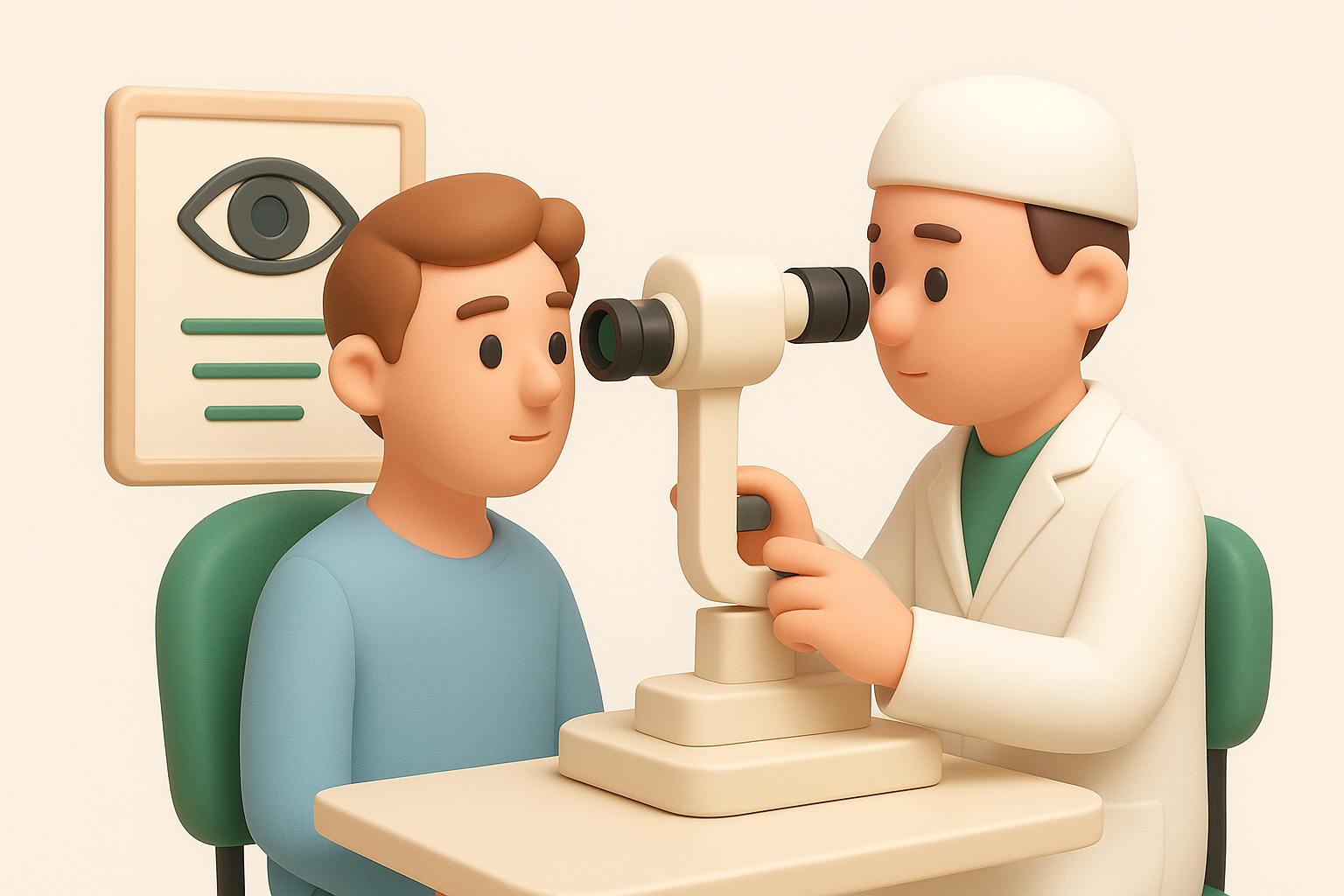
An ophthalmoscope provides another view of your retina, whilst an ultrasound scan might be necessary if bleeding or other issues prevent a clear visual assessment. These tests remain painless and typically take less than 30 minutes to complete, though you’ll need someone to drive you home because of the dilating drops.
Treatment options for harmless floaters
Most floaters require no treatment at all. Your doctor recommends simple monitoring if the examination reveals no retinal tears or other serious problems. Your brain gradually adapts to filter out stable floaters over weeks to months, making them far less noticeable even though they remain physically present in your eye.
Regular eye examinations every year or two ensure any new problems get detected early, even when your existing floaters cause no concern.
You return for urgent reassessment only if new symptoms develop, such as a sudden increase in floaters, flashing lights or vision changes.
Surgical interventions for problematic cases
Severe floaters that significantly impair your vision or quality of life sometimes warrant surgical treatment. Vitrectomy surgery removes the vitreous gel along with the debris causing your floaters, replacing it with a clear salt solution that maintains your eye’s shape. This procedure carries risks including cataracts, retinal detachment and infection, which is why surgeons reserve it for truly debilitating cases.
Laser vitreolysis offers a less invasive alternative for specific types of floaters. Your surgeon uses targeted laser pulses to break up larger floaters into smaller pieces that become less noticeable. Not everyone qualifies for this treatment, and results vary depending on the size, location and type of floaters you experience.
Retinal tears identified during your examination require immediate treatment with laser photocoagulation or cryotherapy to seal the tear and prevent detachment. These procedures take just minutes in your doctor’s office and successfully prevent vision loss in most cases when performed promptly.
Living with floaters and protecting your sight
Adjusting to life with floaters takes patience, but most people adapt within weeks as their brain learns to ignore these visual distractions. You can take specific steps to manage your symptoms whilst protecting your eyes from future complications that might threaten your vision.
Simple daily adjustments that help
Learning to work around that black moving dot in vision makes your daily routine easier. Moving your eyes quickly from side to side causes floaters to drift out of your central vision temporarily, giving you a clearer view when you need it most. Avoid looking at bright, uniform backgrounds like white walls or clear blue skies when possible, as these make floaters far more visible and distracting.
Good lighting helps reduce the contrast between floaters and your background vision. Use softer, diffused lighting rather than harsh overhead lights when reading or working at a computer. Wearing sunglasses outdoors protects your eyes from ultraviolet damage whilst also reducing the stark brightness that makes floaters stand out prominently.
When to seek follow-up care
Schedule regular eye examinations every one to two years even when your floaters remain stable. Your optometrist or ophthalmologist monitors any gradual changes in your vitreous and retina that might indicate developing problems. Contact your eye specialist immediately if new floaters appear, existing ones multiply suddenly, or you notice flashing lights or shadows in your peripheral vision.
Regular monitoring catches potential complications early, when treatment remains simple and highly effective at preventing vision loss.
Protecting your long-term eye health
Several lifestyle measures reduce your risk of serious eye problems developing alongside your floaters. Maintaining healthy blood sugar levels prevents diabetic retinopathy, whilst controlling your blood pressure protects the delicate blood vessels in your retina from damage. Eating a diet rich in leafy greens, fish and colourful vegetables provides essential nutrients that support retinal health throughout your life.
Wearing protective eyewear during sports or activities that risk eye injury prevents trauma that could trigger retinal tears or detachment. Quitting smoking dramatically reduces your risk of developing age-related macular degeneration and other vision-threatening conditions. These proactive steps help preserve your sight for decades to come, even as natural ageing changes continue affecting your vitreous gel.

Next steps for your eye health
Noticing a black moving dot in vision doesn’t have to cause panic, but it does require informed action. You now understand the difference between harmless floaters that develop gradually and urgent symptoms like sudden showers of dots, flashing lights or dark shadows that demand immediate attention. This knowledge empowers you to respond appropriately and protect your sight when it matters most.
Take action by scheduling a comprehensive eye examination if you haven’t had one recently, particularly if you’re over 50, short-sighted or diabetic. Regular monitoring catches problems early when treatment remains most effective and outcomes stay positive. Between examinations, stay alert for any changes in your floaters or new visual symptoms that might signal complications requiring prompt assessment.
Your vision deserves expert care from a specialist who understands retinal health and can provide accurate diagnosis. Book a consultation at Bright Sight Eye Specialists to discuss your symptoms with an experienced ophthalmologist who can assess your eyes thoroughly and provide personalised advice about managing floaters whilst protecting your long-term eye health.