


Those black lines drifting across your vision are eye floaters. They look like dark threads, squiggly lines, or shadows that move when you move your eyes. Floaters are tiny clumps of collagen floating in the vitreous, a gel substance filling your eye. When light passes through, these clumps cast shadows on your retina. You see those shadows as black lines. Most people notice them against bright backgrounds like a clear sky or white wall.
This article explains why black lines appear in your vision, when they signal a serious problem, and what you can do about them. You’ll learn the difference between normal floaters and warning signs that need urgent attention. We cover common conditions linked to black lines, how doctors diagnose them, and your treatment options. By the end, you’ll know exactly when to book an appointment and how to look after your eyesight.
Why black lines in your vision appear
Your vitreous changes as you age. This gel-like substance fills about 80% of your eyeball and sits between your lens and retina. When you’re younger, the vitreous stays thick and clear. After age 50, it gradually liquefies and shrinks. This process pulls the vitreous away from the back wall of your eye. The medical term for this is posterior vitreous detachment, and it happens to most people eventually.
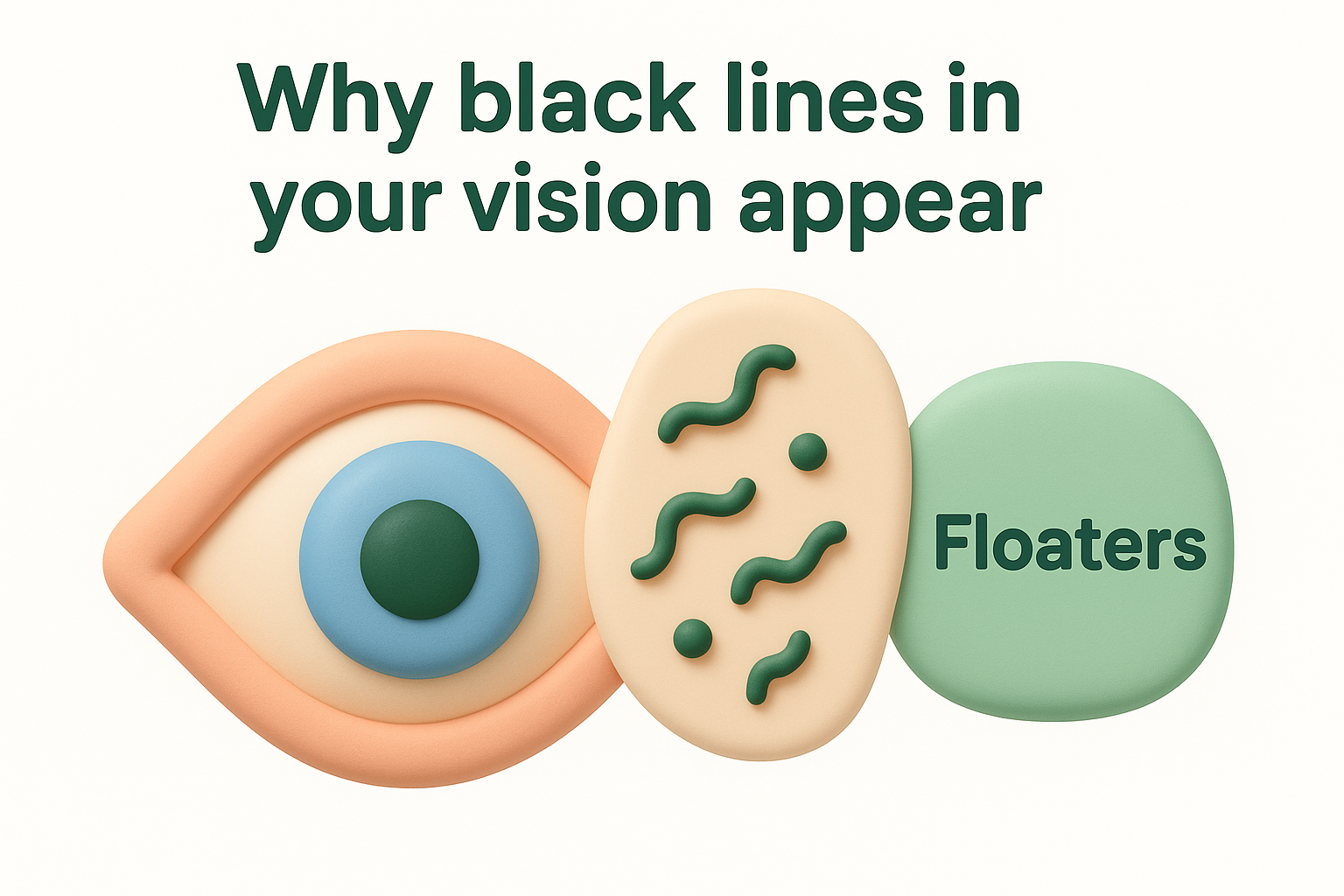
Age-related changes in the vitreous
The vitreous contains collagen fibres that help maintain its structure. These fibres float suspended in the gel throughout your life. As the vitreous liquefies, these collagen strands lose their support. They start to drift freely in the liquid portion of the vitreous. You notice them more because they cast stronger shadows on your retina.
Short-sighted people often experience black lines in vision earlier than others. Your eye shape makes the vitreous more likely to detach sooner. People with myopia have longer eyeballs, which puts extra stress on the vitreous attachment points.
When collagen fibres clump together
Individual collagen fibres bunch up and form larger clumps during the liquefaction process. These clumps become the black lines and squiggles you see. The bigger the clump, the more obvious the shadow it creates. Small fibres might look like dots, while longer strands appear as squiggly lines or threads.
Normal ageing causes most eye floaters, and this process affects nearly everyone over 60.
Floaters move because they’re genuinely floating inside your eye. When you move your eyes quickly, the liquid shifts and carries the floaters with it. They seem to dart away when you try to look directly at them.
How to tell if black lines in vision are serious
Most black lines in vision are harmless floaters caused by natural ageing. You can safely monitor them at home if they appear gradually and don’t change your vision quality. However, certain warning signs mean you need urgent medical attention. The difference between normal and serious floaters depends on how quickly they appear and what other symptoms come with them.
Warning signs that need immediate attention
You should visit an emergency department if you notice a sudden increase in floaters within hours or days. This rapid onset can signal a retinal tear or detachment. Watch for flashes of light in the same eye as the black lines. These flashes look like lightning bolts or camera flashes, especially noticeable in dim light or with your eyes closed.
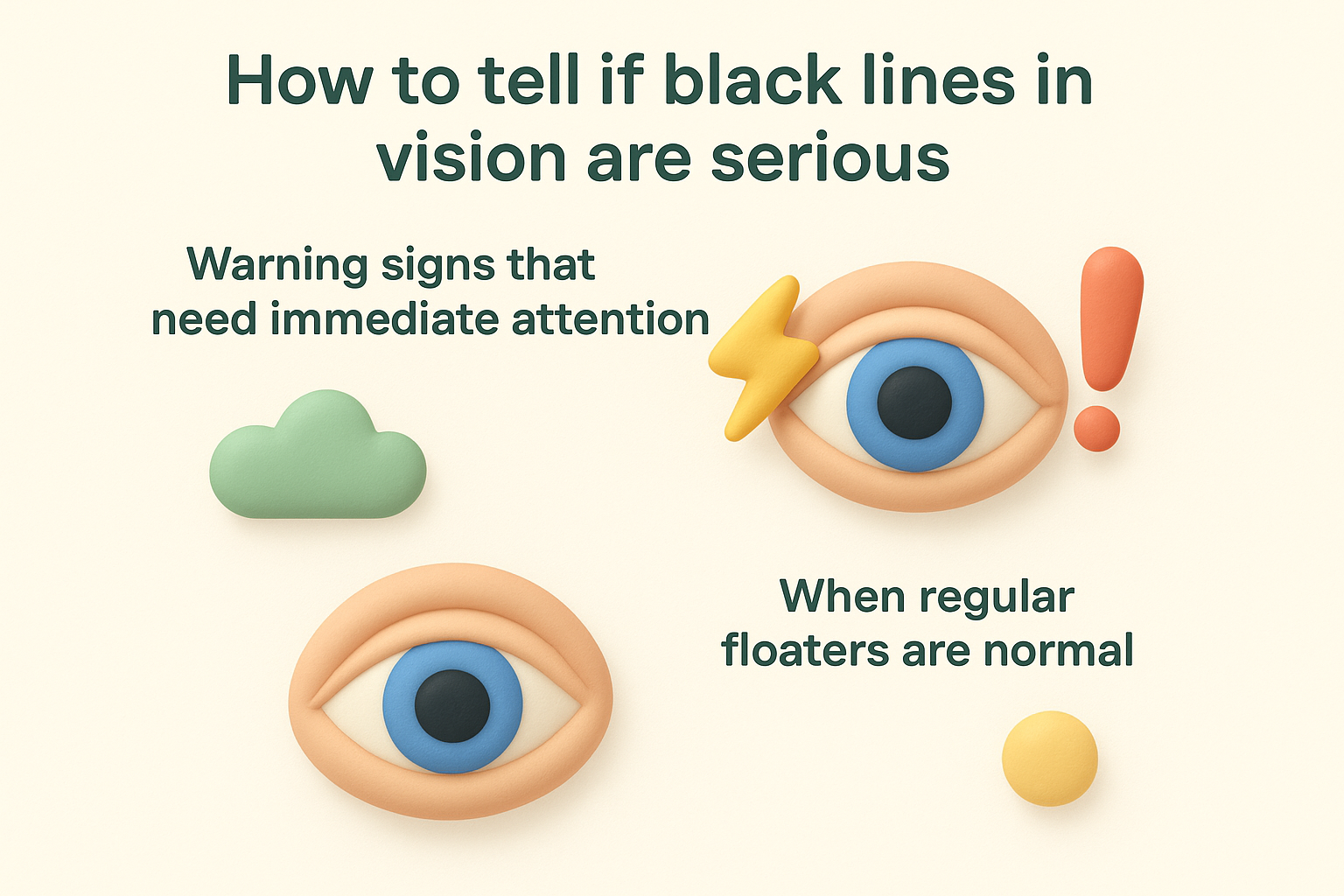
A grey curtain or shadow blocking part of your vision is a medical emergency. This symptom means your retina might be detaching from the back of your eye. Darkness creeping in from the sides of your vision also requires immediate care. Blood in your eye from diabetes complications or injury causes a sudden shower of new floaters.
Retinal detachment is a sight-threatening emergency that requires treatment within hours to prevent permanent vision loss.
When regular floaters are normal
Gradual appearance of one or two floaters over weeks or months usually isn’t concerning. Normal floaters drift slowly and don’t affect your central vision. They become less noticeable over time as your brain adapts. Seeing them more clearly on bright days is completely typical.
Common symptoms and conditions linked to black lines
Black lines in vision come with different symptoms depending on their cause. Normal floaters drift slowly and don’t block your vision. They appear as transparent threads or dots that move when you look around. You might notice them more on sunny days or when looking at white surfaces. These harmless floaters rarely need treatment and your brain learns to ignore them over months.
Posterior vitreous detachment and retinal problems
Posterior vitreous detachment causes most new floaters in people over 50. The vitreous pulls away from your retina during this natural process. You might see flashing lights alongside black lines, particularly in dim conditions. These flashes happen because the vitreous tugs on your retina as it separates.
Retinal tears create a sudden shower of new floaters, often described as hundreds of tiny dots. A torn retina lets fluid seep behind it, which can lead to retinal detachment. This condition causes a shadow or curtain moving across your vision. You lose peripheral vision on the affected side as the retina separates.
Retinal detachment requires surgical treatment within 24 to 48 hours to prevent permanent blindness.
Bleeding and inflammation inside the eye
Vitreous haemorrhage happens when blood vessels break inside your eye. Diabetes-related retinopathy commonly causes this problem. The blood cells appear as dense black spots or clouds that block your vision significantly. High blood pressure can also rupture these tiny blood vessels.
Uveitis is inflammation in the middle layer of your eye wall. This condition creates floaters along with eye pain, redness and sensitivity to light. Autoimmune diseases, infections, or inflammatory conditions trigger uveitis. Diabetic retinopathy damages blood vessels throughout your retina and creates both floaters and vision loss if left untreated.
Getting diagnosed and what happens next
Your doctor examines your eyes thoroughly to determine the cause of black lines in vision. This examination differs from a standard eye test because it focuses on the back of your eye where floaters form. You’ll need your pupils dilated with special drops, which takes about 20 to 30 minutes to work fully. The dilation lets your doctor see right through to your retina and vitreous.

The eye examination process
During the exam, your doctor shines a bright light into your dilated pupils using an ophthalmoscope or slit lamp. This equipment magnifies the inside of your eye so they can spot any problems. They check for tears, detachments, or bleeding in your retina. The examination is painless but the bright light feels uncomfortable temporarily.
Your vision stays blurry for several hours after dilation, so bring someone to drive you home. Sunglasses help because your pupils can’t adjust to bright light whilst dilated. Some doctors use ultrasound imaging if they can’t see your retina clearly through the vitreous, particularly when bleeding blocks the view.
What your doctor looks for
Your doctor checks whether the floaters come from normal ageing changes or serious conditions. They examine the vitreous attachment points on your retina for any pulling or tearing. Bleeding, inflammation, or abnormal blood vessels indicate problems that need treatment.
A complete dilated eye exam lets your doctor see the entire retina and identify any sight-threatening conditions early.
Most people receive reassurance that their floaters are harmless. Your doctor schedules follow-up appointments if they find any concerning changes that need monitoring over time.
Treatment options and long term eye care
Most people with black lines in vision don’t need any treatment. Your doctor monitors your floaters during regular eye examinations to ensure they’re not causing problems. The floaters remain in your eye permanently, but your brain adapts over weeks or months. You stop noticing them as your visual system learns to filter them out. This natural adaptation works for the vast majority of patients with age-related floaters.
When observation is the best approach
Your doctor recommends watchful waiting if your floaters don’t significantly affect your daily activities. This approach avoids the risks associated with surgical procedures. You attend follow-up appointments every few months initially, then annually once your condition stabilises. During these visits, your doctor checks that the floaters haven’t changed and your retina remains healthy.
Adaptation happens faster when you stay active and engaged in normal activities. Looking at bright screens or white surfaces makes floaters more noticeable, but avoiding these situations isn’t necessary. Your visual system gradually adjusts regardless of your activities.
Surgical and laser treatments
Vitrectomy surgery removes the vitreous gel containing the floaters and replaces it with a clear solution. Your surgeon makes tiny incisions in your eye to extract the vitreous. This procedure carries risks including bleeding, cataracts, and retinal detachment. Doctors only recommend vitrectomy when floaters severely impact your quality of life or vision.
Laser vitreolysis uses focused laser pulses to break up larger floaters into smaller pieces. The treatment takes 20 to 60 minutes and you go home the same day. Most patients need two or three sessions for best results. This option works better for specific types of floaters and isn’t suitable for everyone.
Surgical treatments for floaters carry significant risks, so doctors reserve them for severe cases that genuinely interfere with daily life.
Treating underlying causes
Diabetes management prevents new floaters from blood vessel damage in your retina. You need regular eye examinations every six to twelve months if you have diabetes. Anti-inflammatory medications or injections treat uveitis-related floaters. Your doctor addresses high blood pressure to reduce bleeding risk inside your eye.

Looking after your eyesight
Regular eye examinations protect your vision and catch problems early. You should book comprehensive eye checks every one to two years after age 50, even when you feel fine. These examinations detect changes in your retina before symptoms develop. Controlling chronic conditions like diabetes and high blood pressure reduces your risk of developing black lines in vision from bleeding or inflammation.
Maintain your overall health through balanced nutrition, regular exercise, and avoiding smoking. These lifestyle factors directly affect the blood vessels in your eyes. Wear sunglasses with UV protection on bright days to shield your retina from damage.
Contact an eye specialist immediately if you notice sudden floaters, flashes of light, or shadows in your vision. Early intervention prevents permanent vision loss from retinal detachment or tears. Book a comprehensive eye examination at Bright Sight Eye Specialists in Randwick for expert care and peace of mind about your eye health.