


You notice a black dot in vision that moves when you look at a bright sky or white wall. It drifts across your field of view and seems to dart away when you try to focus on it. This is most likely an eye floater, a common visual phenomenon caused by tiny clumps of collagen floating inside the gel that fills your eyeball. Most floaters are harmless and age related, appearing as dots, squiggly lines, or cobweb shapes that cast shadows on your retina.
This article explains what causes these moving black dots and how to tell if yours are normal floaters or something more serious. You will learn the warning signs that need urgent medical attention, what other conditions might cause similar symptoms, and what treatment options exist if floaters bother you. We will also cover simple ways to protect your eye health and when to book an appointment with an eye specialist in Sydney.
Why a moving black dot appears
Your eye contains a clear gel called vitreous humour that fills the space between your lens and retina. This gel is mostly water, but it also contains collagen fibres that help maintain its structure. When you are young, the vitreous has a firm, uniform consistency. As you age, the gel gradually liquefies and the collagen fibres begin to clump together. These tiny clumps cast shadows on the retina at the back of your eye, and what you perceive as a black dot in vision that moves is actually that shadow.

The role of vitreous humour
The vitreous gel normally sits against your retina and moves with your eye movements. When collagen strands break loose and float freely within the liquefied vitreous, they drift through your field of vision. This explains why floaters seem to move when you shift your gaze and why they appear more noticeable against bright, plain backgrounds like a blue sky or white wall. The contrast makes the shadows more visible.
Most people develop some degree of vitreous liquefaction after age 40, making floaters increasingly common with advancing years.
Collagen clumps and shadows
Each floater you see represents a specific clump of collagen inside your eye. Smaller clumps appear as dots, whilst larger aggregations may look like threads, squiggly lines, or cobwebs. The shadow’s size and shape depend entirely on the structure of the collagen clump and its distance from your retina.
How to tell if it is a floater
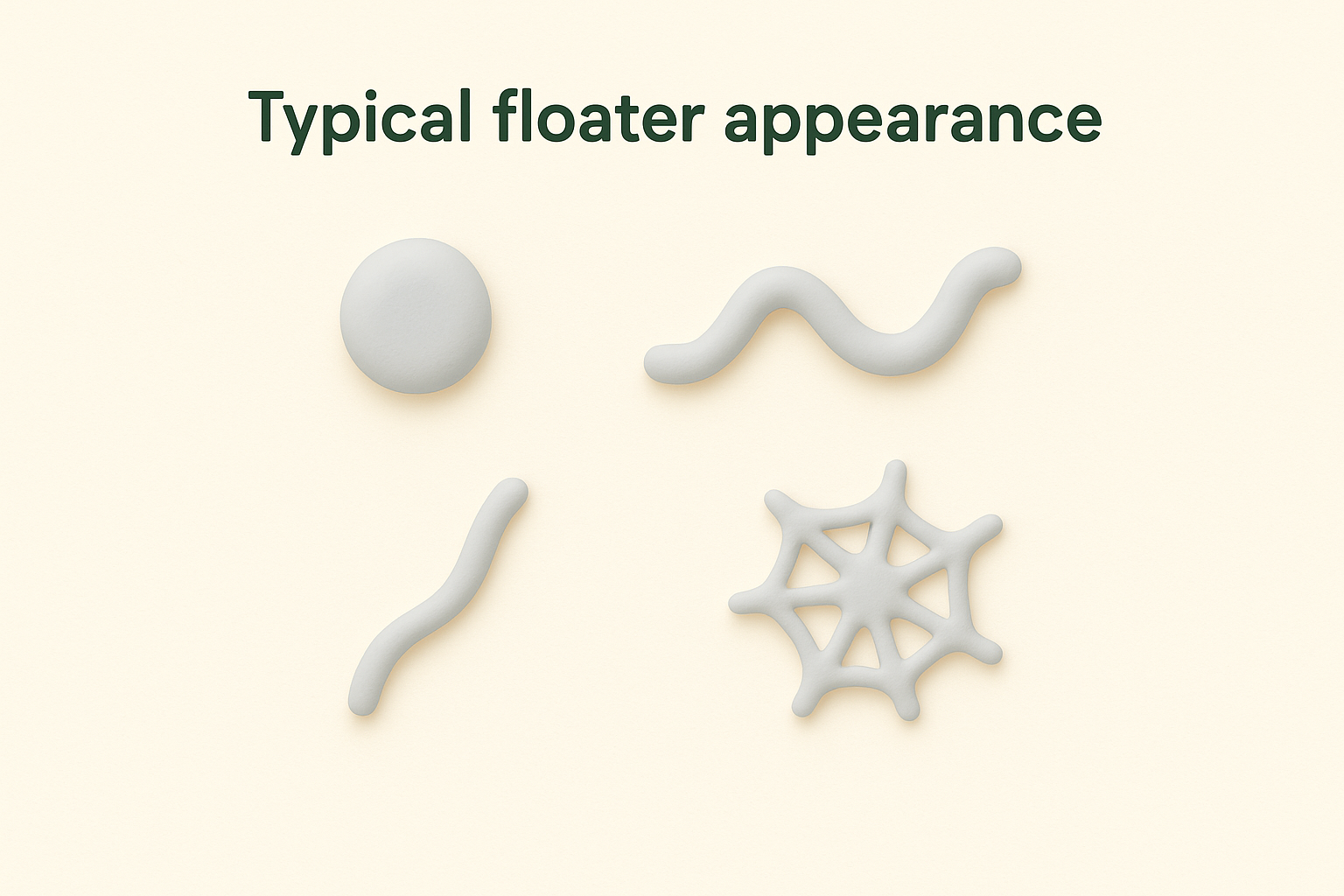
A genuine floater has distinctive characteristics that set it apart from other visual disturbances. When you see a black dot in vision that moves, you can identify a floater by observing how it behaves and what triggers its appearance. Floaters typically become more visible in bright lighting conditions and seem to drift slowly across your field of view rather than appearing fixed in one spot.
Typical floater appearance
True floaters appear as semi-transparent shapes that can look like dots, squiggly lines, threads, or cobwebs. They maintain a consistent shape and size over time, though they may drift to different positions within your visual field. You will notice them most clearly when looking at uniform, light-coloured backgrounds such as a clear sky or a plain wall.
How floaters move
Floaters drift in the direction of your eye movements but with a slight delay. When you shift your gaze quickly, the floater seems to lag behind and then continues moving briefly after your eye stops. This lag occurs because the floater floats freely within the vitreous gel rather than being attached to any eye structure.
The delayed movement and drifting behaviour confirm that what you are seeing comes from inside your eye rather than an external source.
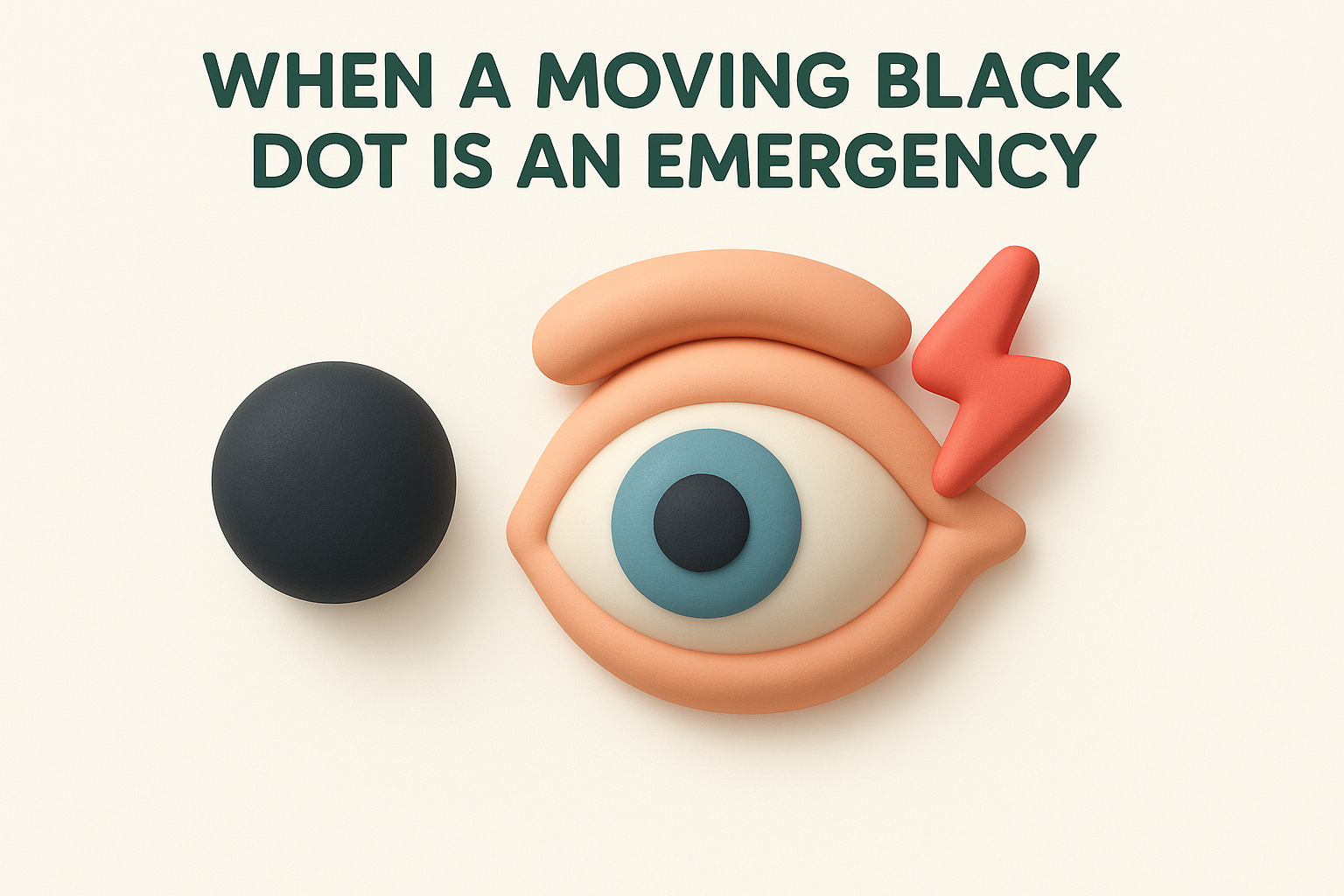
When a moving black dot is an emergency
Most floaters develop gradually and pose no immediate danger, but certain situations require urgent medical attention. A sudden increase in floaters, especially when accompanied by flashes of light or vision loss, may signal a serious problem with your retina. These symptoms can indicate a retinal tear or detachment, which threatens your sight if left untreated. You should treat these warning signs as a medical emergency and seek same-day care from an eye specialist.
Signs that need immediate attention
You need to visit an emergency department or eye specialist immediately if you experience a sudden shower of new floaters appearing within hours or days. This rapid onset differs markedly from the gradual appearance of age-related floaters. Watch for flashing lights that resemble lightning bolts in your peripheral vision, as these flashes suggest the vitreous is pulling on your retina. A dark curtain or shadow spreading across your field of view indicates possible retinal detachment, whilst a sudden grey blur blocking part of your vision requires urgent assessment.
Retinal detachment can cause permanent vision loss if not treated within 24 to 48 hours.
Why speed matters
When your retina tears or detaches, time becomes critical for preserving your sight. A tear allows fluid to seep behind the retina, causing it to separate from the supporting tissue underneath. This separation cuts off the retina’s blood supply and oxygen, leading to permanent damage within days if untreated. Early surgical intervention can reattach the retina and prevent vision loss, but delayed treatment significantly reduces the chances of full recovery.
Other causes of moving black dots
Whilst floaters account for most cases of a black dot in vision that moves, other conditions can produce similar symptoms. Vitreous haemorrhage occurs when blood leaks into the gel inside your eye, creating sudden dark spots or clouds that obscure your vision. This bleeding typically results from diabetic retinopathy, injury, or abnormal blood vessels. Posterior uveitis, an inflammation affecting the back of your eye, can also cause floating dark spots along with blurred vision and light sensitivity.
Less common triggers
Migraine auras sometimes produce visual disturbances including moving dots or zigzag patterns, though these usually disappear within 20 minutes and may occur without headache. High blood pressure or sudden drops in blood pressure when standing can briefly cause spots or darkening of vision. Eye trauma from direct injury can disturb the vitreous and create new floaters, whilst certain medications or eye surgeries may also trigger their appearance.
Any sudden change in your vision quality or the appearance of multiple new spots warrants professional assessment to rule out serious causes.
Tests and treatment options
Your eye specialist uses a dilated eye examination to diagnose the cause of a black dot in vision that moves. The doctor places drops in your eyes to widen your pupils, allowing a clear view of the vitreous gel and retina. This painless examination takes 20 to 30 minutes and enables the specialist to identify floaters, check for retinal tears, and rule out serious conditions like detachment or bleeding.
Diagnostic examination
During your appointment, the ophthalmologist uses a slit lamp microscope to examine the front structures of your eye, then switches to an ophthalmoscope or specialised lens to inspect your retina thoroughly. They may perform optical coherence tomography (OCT), which creates detailed cross-sectional images of your retina and vitreous. These scans help identify subtle tears, membrane formation, or areas of traction that standard examination might miss.

Treatment approaches
Most floaters require no treatment because your brain gradually adapts to their presence and filters them from your conscious awareness. This natural adaptation typically occurs over weeks to months. If floaters significantly impair your vision or quality of life, you have two surgical options: vitrectomy removes the vitreous gel entirely and replaces it with saline solution, whilst laser vitreolysis uses targeted energy pulses to break apart larger floaters into smaller, less noticeable fragments.
Surgical intervention carries risks including cataracts, retinal tears, and infection, so specialists reserve these procedures for severe cases where floaters genuinely obstruct vision.
Your ophthalmologist assesses the size, location, and density of your floaters before recommending any intervention. Conservative monitoring remains the preferred approach for most patients with benign floaters.

Looking after your eye health
Most cases of a black dot in vision that moves resolve without treatment as your brain learns to ignore the floaters over time. Schedule regular eye examinations to detect problems early, especially if you are over 50, short-sighted, or have diabetes. Protect your eyes from injury by wearing appropriate safety glasses during sports or work activities that pose risks. Book an appointment immediately if you notice sudden changes in your floaters, flashing lights, or vision loss spreading across your field of view. Bright Sight Eye Specialists offers comprehensive retinal assessments using advanced diagnostic technology, ensuring your eye health receives expert attention when you need it most.